
Most travelers are surprised to learn that over 60 percent of American families misunderstand how rental contracts work when exploring international destinations. This matters because simple contract mistakes can lead to unexpected fees or disputes, especially when renting cars or booking boat tours abroad. If you want stress-free adventures for your loved ones, understanding the differences in rental agreements across countries will help protect your plans and make each trip memorable.
Table of Contents
- Defining Rental Contracts And Common Misconceptions
- Car And Boat Rental Contract Types Compared
- Key Clauses In International Rental Agreements
- Required Documents And Eligibility To Rent
- Your Rights, Obligations, And Legal Risks
- Common Pitfalls And How To Protect Yourself
Key Takeaways
| Point | Details |
|---|---|
| Understand Contract Types | Familiarize yourself with the differences between rental agreements and leases, as rental agreements are typically more flexible and may have different terms based on local laws. |
| Check Document Requirements | Be prepared with essential documents like photo identification and legal residency proof to verify your eligibility when renting. |
| Review Contract Clauses | Pay close attention to key clauses in international rental agreements, including force majeure and dispute resolution, to understand your rights and protections. |
| Avoid Common Pitfalls | Proactively request complete translations of rental contracts and remain vigilant for hidden fees or vague terms to protect yourself from potential legal issues. |
Defining Rental Contracts and Common Misconceptions
Rental contracts represent legal agreements that define the temporary possession and use of property between two parties. Understanding their nuanced structure helps travelers avoid potential misunderstandings. Rental agreements fundamentally establish the terms of property usage, specifying critical details like duration, financial obligations, and responsibilities of both the owner and renter.
A key distinction exists between rental agreements and leases that many international travelers overlook. Rental agreements tend to be more flexible and shorter term, often operating on a month-to-month basis, while leases typically lock in specific conditions for six to twelve months. This flexibility means rental agreements can be more adaptable but potentially less stable. Contract variations can significantly impact a traveler’s experience, particularly when renting vehicles or accommodations abroad.
Common misconceptions about rental contracts frequently emerge from assumptions about standardized terms. Many travelers mistakenly believe all rental agreements function identically across different countries or jurisdictions. In reality, contract specifics can vary dramatically based on local regulations, cultural norms, and specific rental provider policies. Understanding these nuanced differences becomes crucial when navigating international rental scenarios, whether for cars, boats, or other transportation equipment.
Pro tip: Always request a complete translation of the rental contract and carefully review all terms before signing, paying special attention to cancellation policies, insurance requirements, and potential additional fees.
Car And Boat Rental Contract Types Compared
Rental contracts for cars and boats share fundamental structural similarities while presenting unique nuanced differences that travelers must understand. Vehicle rental contracts typically encompass detailed specifications about usage, liability, and financial responsibilities, with specific variations depending on the type of transportation being rented. These contracts serve as legal frameworks that protect both the rental company and the customer by clearly defining expectations and potential scenarios.
Car rental agreements often include more complex provisions compared to boat rentals. Key differences emerge in areas like insurance coverage, mileage restrictions, and potential geographic limitations. Contract terms for car rentals frequently specify precise conditions about vehicle usage, including fuel policies, return conditions, and potential additional fees for damages or extended usage. Boat rental contracts, while similar, tend to have more location-specific regulations that can vary dramatically based on local maritime laws and regional recreational guidelines.

The primary distinctions between car and boat rental contracts often revolve around risk assessment and liability management. Car rental agreements typically focus on road-related risks, driver qualifications, and vehicle condition, while boat rental contracts must address additional complex factors like maritime safety regulations, weather conditions, and specialized operating requirements. These variations mean that travelers cannot assume identical contract structures across different transportation rental types, necessitating careful individual review of each specific agreement.
Here’s a comparison of key contract features for car and boat rentals to clarify their practical differences:
| Contract Feature | Car Rental Agreements | Boat Rental Agreements |
|---|---|---|
| Insurance Requirements | Mandatory liability and optional full coverage | Often limited, may exclude weather damage |
| Usage Restrictions | Mileage, road type, driver eligibility | Water zones, licensing, weather limits |
| Return Conditions | Fuel level, cleanliness, inspection | Hull inspection, safety equipment check |
| Legal Considerations | Road laws, accident reports | Maritime laws, navigation regulations |
Pro tip: Always photograph the vehicle or boat’s condition before rental and request a comprehensive written condition report to document any pre-existing damages and protect yourself from unfair liability claims.
Key Clauses In International Rental Agreements
International rental agreements require careful navigation of complex legal landscapes, with specific contractual provisions designed to protect both renters and service providers. These agreements go beyond simple transactional documents, serving as comprehensive frameworks that address potential risks, operational challenges, and unexpected scenarios that might arise during international rentals.
Several critical clauses form the backbone of robust international rental contracts. Force majeure clauses protect both parties against uncontrollable events like natural disasters or political disruptions, while hardship clauses provide mechanisms for contract adaptation when circumstances dramatically change. Dispute resolution clauses become particularly crucial in cross-border rentals, specifying exact jurisdictional guidelines and potential mediation processes to resolve potential conflicts without resorting to lengthy international legal battles.
Standardized model clauses play a significant role in creating predictability and fairness in international rental agreements. These provisions typically address complex issues like currency fluctuations, regulatory compliance differences across jurisdictions, and specific performance expectations. Understanding these nuanced clauses becomes essential for travelers, as they define responsibilities, outline potential penalties, and establish clear expectations for both the rental service provider and the customer.
Pro tip: Always request a comprehensive English translation of the rental agreement and consider having a local legal professional review the contract before signing to ensure you fully understand all clauses and potential implications.
Required Documents And Eligibility To Rent
Rental eligibility involves a complex set of requirements that vary significantly across different jurisdictions and rental types. Rental documentation serves as a critical mechanism for verifying a potential renter’s reliability, financial stability, and legal right to occupy a rental property. International travelers must be prepared with a comprehensive portfolio of personal and financial documents to demonstrate their eligibility and trustworthiness.
Typical documentation requirements include multiple layers of verification. Renters typically need to provide government-issued photo identification, proof of income or financial resources, and legal residency documents. For international travelers, this often means presenting a valid passport, visa, work permit, or other authorized travel documentation. Additional requirements might include credit checks, employment verification, and sometimes a local guarantor who can vouch for the renter’s financial responsibility and character.
Legal residence documents become particularly crucial for individuals from diverse international backgrounds. These documents not only confirm a person’s legal right to rent but also protect both the rental provider and the renter by establishing clear legal standing. Special considerations exist for refugees, immigrants, and individuals with complex legal status, who may need to provide additional documentation from governmental or international organizations to establish their rental eligibility.
This summary highlights the most important documents and eligibility factors for successful international rentals:
| Requirement | Purpose | Common Examples |
|---|---|---|
| Photo Identification | Prove renter identity | Passport, national ID, driver’s license |
| Legal Residency | Verify rental eligibility | Visa, work permit, residence card |
| Financial Documents | Demonstrate payment ability | Bank statement, credit card, pay stub |
| Local Guarantor | Assure contractual reliability | Signed guarantee from resident |
Pro tip: Always carry multiple certified copies of your identification and financial documents when traveling internationally, and consider having them translated into the local language to expedite rental processes.
Your Rights, Obligations, And Legal Risks
Rental agreements create a complex legal landscape where both parties have specific rights and responsibilities. These legal frameworks establish clear expectations, protecting both renters and rental providers through well-defined obligations. Understanding these nuanced relationships becomes critical for international travelers to avoid potential legal complications and ensure smooth rental experiences.
The core of rental agreements revolves around balanced mutual obligations. Renters are typically required to pay rent punctually, maintain the property in reasonable condition, and adhere strictly to contract terms. Rental providers, conversely, must ensure the property remains habitable, safe, and compliant with local housing regulations. Landlord duties extend beyond mere property provision, encompassing maintenance of common areas, timely repairs, and respecting the renter’s right to privacy and peaceful enjoyment of the space.
Legal risks emerge when either party fails to meet their contractual obligations. For renters, potential consequences include eviction proceedings, financial penalties, and potential legal action for property damage. Rental providers risk legal challenges if they fail to maintain habitable conditions or violate local tenant protection laws. International travelers face additional complexity, as rental regulations can vary dramatically between jurisdictions, making comprehensive understanding of local legal frameworks absolutely essential for protecting one’s interests.
Pro tip: Always document the property’s condition through photographs and written reports upon arrival, and maintain open communication with the rental provider to prevent misunderstandings that could escalate into legal disputes.
Common Pitfalls And How To Protect Yourself
International rental experiences are fraught with potential complications that can transform an exciting adventure into a legal nightmare. International contract negotiations require meticulous attention to detail, with travelers needing to navigate complex linguistic, cultural, and legal landscapes that can dramatically impact their rental experience.
Common pitfalls for international travelers include hidden fees, unclear cancellation policies, and ambiguous insurance provisions. Many renters inadvertently expose themselves to significant financial risk by not thoroughly understanding contract language, particularly when rental agreements are presented in a foreign language. Critical areas of vulnerability include unclear damage assessment protocols, unexpected surcharges, limited liability clauses, and complex penalty structures that can quickly transform a seemingly affordable rental into an expensive ordeal. Specific red flags include contracts with vague terminology, missing explicit definitions of responsibilities, and one-sided terms that disproportionately benefit the rental provider.
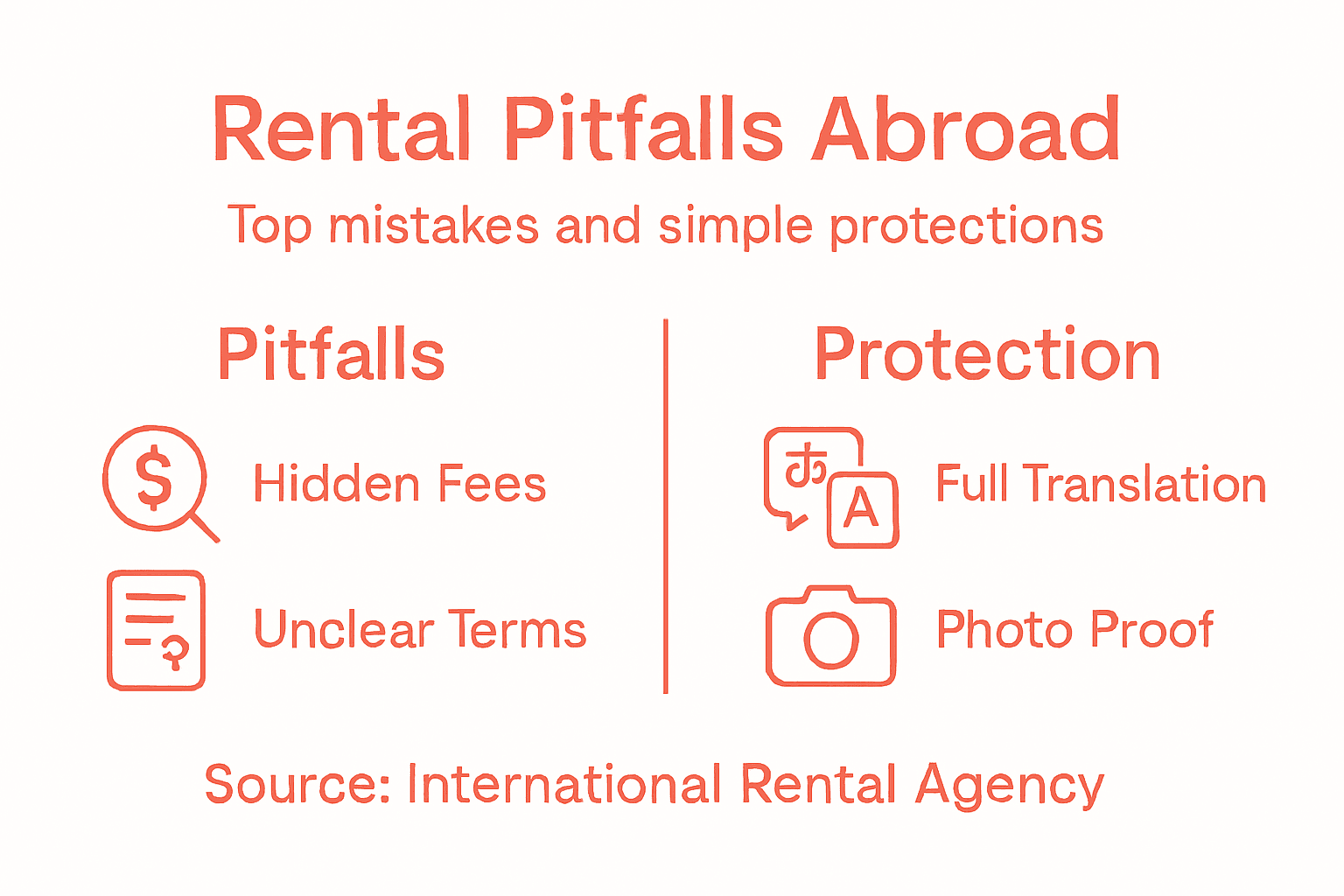
Protecting yourself requires a proactive and strategic approach. Recommended strategies include requesting complete contract translations, consulting with local legal experts, documenting all communication, and carefully photographing rental conditions before and after use. International travelers should pay special attention to dispute resolution mechanisms, insurance coverage details, and specific jurisdictional clauses that could impact their legal recourse in case of conflicts. Understanding these nuanced elements can mean the difference between a smooth rental experience and a potential legal quagmire.
Pro tip: Always request a comprehensive written contract in a language you fully understand, and consider having a local legal professional review the document before signing to identify potential risks or unfair clauses.
Navigate Rental Contracts with Confidence and Secure Your Perfect Ride or Boat Today
Understanding rental contracts can be a daunting challenge for international travelers. From discerning insurance coverage to clarifying usage restrictions and legal obligations, the risk of costly misunderstandings is real. This article highlights key pain points like ambiguous contract terms and unfamiliar legal frameworks that can turn your rental experience into a stressful ordeal. At Rentngo.biz, we simplify this journey by offering transparent car rentals and boat tours designed with your safety and peace of mind in mind.

Choose from a curated selection of vehicles and boats where rental terms are clearly communicated and easy to understand. Whether you are navigating local road laws or maritime regulations, our platform puts you in control with detailed listings and hassle-free booking options. Don’t let confusing rental contracts hold you back. Explore reliable car rentals and memorable boat tours now at Rentngo.biz and transform your travel experience. Act today to secure the best rates and rental conditions tailored for your next adventure.
Frequently Asked Questions
What is the difference between a rental agreement and a lease?
Rental agreements are typically more flexible and short-term, often month-to-month, while leases are more rigid and usually last six to twelve months.
What key clauses should I look for in an international rental contract?
Look for force majeure clauses, hardship clauses, and dispute resolution clauses, which help protect both renters and service providers in case of unexpected events or conflicts.
What documents are usually required to rent a property abroad?
Most rentals require government-issued photo identification, legal residency documents (such as a passport or visa), and proof of income or financial resources.
How can I protect myself from hidden fees when renting abroad?
Carefully review the rental contract for unclear terms, request a translation if needed, document the property’s condition before and after use, and ensure you understand cancellation policies and insurance coverage.
Recommended
- Types of Rental Agreements: What Tourists Should Know – Rent&Go Car Rental Vlore
- Role of Rental Agreements – Safeguarding Rentals Worldwide – Rent&Go Car Rental Vlore
- What Is Rental Duration and Why It Matters – Rent&Go Car Rental Vlore
- 7 Rental Scams to Avoid When Booking Cars and Boats – Rent&Go Car Rental Vlore
- Travel Deal Terminology Explained: Maximizing Savings – PilotTravelDeals.com
Related Posts

The Essential Guide to Renting Boats in Albania
Renting a boat along Albania’s Adriatic coastline introduces a vibrant…

What Is Short Term Rental? Key Facts for Travelers
Over 60 percent of American travelers now consider short-term rentals…

Why Rent a Car in Vlore: Complete Guide
Driving through Vlore opens a world of adventure that public…