
Every year, over 60 percent of international travelers choose seasonal rentals over traditional hotels for their vacations, with many american visitors leading the trend. Exploring popular destinations does not have to break the bank when short-term vehicle rentals and boat tours offer cost-effective freedom and flexibility. This guide sheds light on how seasonal rentals can deliver more local experiences, extra privacy, and smarter savings for tourists who want more value from every getaway.
Table of Contents
- Defining Seasonal Rentals In Tourism
- Types Of Seasonal Rentals For Travelers
- How Seasonal Rental Agreements Work
- Major Benefits And Potential Drawbacks
- Cost Factors And Common Pitfalls
Key Takeaways
| Point | Details |
|---|---|
| Understanding Seasonal Rentals | These rentals provide flexible, short-term access to accommodations, enhancing travel experiences and offering greater privacy than hotels. |
| Types of Seasonal Rentals | Options include vacation homes, RVs, and unique local accommodations, enabling travelers to customize their experiences. |
| Rental Agreements | Contracts define terms between owners and travelers, emphasizing clarity and mutual protection in the rental process. |
| Cost Considerations | Be aware of additional fees beyond the base rate, as well as pricing fluctuations during peak seasons to avoid financial surprises. |
Defining Seasonal Rentals in Tourism
Seasonal rentals represent a dynamic segment within the tourism industry where travelers temporarily lease accommodations or transportation for specific time periods, typically during peak vacation seasons. These unique rental arrangements differ significantly from traditional long-term leases by offering flexible, short-term access to properties and vehicles tailored to travelers’ specific timeframes and needs.
Understanding seasonal rentals requires recognizing their core characteristics, which are shaped by evolving tourism patterns and traveler preferences. Emerging tourism research indicates that these rentals have transformed how people experience travel, providing more personalized and adaptable options compared to standard hotel stays. Seasonal rentals encompass various property types, including vacation homes, beach condos, ski chalets, RVs, boats, and seasonal vehicle rentals that cater to specific recreational activities and destination requirements.
The tourism ecosystem has increasingly embraced seasonal rentals as a flexible alternative to traditional accommodation models. These arrangements provide travelers with unique advantages such as cost-effectiveness, greater privacy, and the ability to live more like a local while exploring new destinations. Moreover, seasonal rentals often come fully equipped with amenities that enhance the travel experience, allowing guests to customize their stay according to individual preferences and budget constraints.
Pro tip: When booking a seasonal rental, always verify the exact dates of availability and understand the specific terms of your rental agreement to avoid unexpected complications during your travel.
Types of Seasonal Rentals for Travelers
Seasonal rentals encompass a diverse range of accommodation and transportation options designed to meet the varied needs of modern travelers. Different lodging types reflect the complexity and flexibility of contemporary travel experiences, offering travelers unprecedented choices beyond traditional hotel stays. These rental categories span from fully equipped vacation homes to specialized vehicles and unique local accommodations that provide immersive travel experiences.
Travel enthusiasts can choose from several prominent seasonal rental categories. Residential options include beach houses, mountain cabins, urban apartments, and countryside cottages that offer travelers a home-like environment in diverse destinations. Transportation-related seasonal rentals feature recreational vehicles (RVs), campervans, boats, and seasonal car rentals that enable travelers to explore destinations with greater independence and mobility. Additionally, unique rental experiences like timeshares, glamping setups, and adventure-specific accommodations provide niche options for travelers seeking distinctive travel experiences.

The digital landscape has dramatically transformed seasonal rental accessibility, making it easier for travelers to discover and book unique properties worldwide. Digital platforms have democratized travel accommodations, allowing property owners to connect directly with potential renters and offering travelers unprecedented transparency and variety. Some seasonal rentals now come with advanced amenities like smart home technologies, personalized service options, and comprehensive insurance coverage, further enhancing the overall travel experience.
Pro tip: Always compare multiple seasonal rental options and read detailed reviews to ensure the property meets your specific travel requirements and expectations.
Here’s a summary of the main types of seasonal rentals and their traveler benefits:
| Rental Type | Typical Amenities | Traveler Benefit |
|---|---|---|
| Vacation Homes | Full kitchen, outdoor space | Home-like comfort, privacy |
| Beach Condos | Ocean view, pool access | Scenic location, relaxation |
| RVs & Campervans | Sleeping area, kitchenette | Mobility, flexible itinerary |
| Boats | Cabin, marine equipment | Unique adventure experience |
| Urban Apartments | WiFi, kitchen, laundry | City immersion, independence |
How Seasonal Rental Agreements Work
Seasonal rental agreements are legally binding contracts that establish the fundamental terms and conditions between property owners and travelers. Rental agreements serve as critical documents that define the specific parameters of temporary property usage, protecting the interests of both parties through clearly outlined expectations and responsibilities.
These agreements typically include several key components that comprehensively address the rental experience. Essential elements encompass the precise rental duration, total cost, payment schedules, security deposit requirements, and specific usage restrictions. Rental agreements also outline important logistical details such as check-in and check-out procedures, maintenance responsibilities, occupancy limits, and policies regarding potential damages or early termination. Some seasonal rental contracts include additional clauses addressing unique situations like pet permissions, noise regulations, and specific property usage guidelines.
Modern seasonal rental agreements have evolved to become more sophisticated and traveler-friendly, incorporating digital technologies that streamline the booking and documentation process. Many contemporary agreements now feature flexible terms that accommodate changing travel plans, transparent cancellation policies, and comprehensive insurance options. Digital platforms have transformed how these agreements are created, reviewed, and executed, enabling travelers to understand contract terms more clearly and negotiate more effectively. Advanced rental agreements increasingly prioritize mutual protection and transparency, ensuring both property owners and travelers have clear, mutually understood expectations.
Pro tip: Always carefully read the entire rental agreement and ask for clarification on any terms you do not fully understand before signing.
Major Benefits and Potential Drawbacks
Seasonal rentals offer travelers and property owners a range of compelling advantages alongside several notable challenges. Seasonal business research reveals the complex dynamics that define this unique rental market, highlighting the nuanced landscape of opportunities and potential risks inherent in seasonal rental experiences.
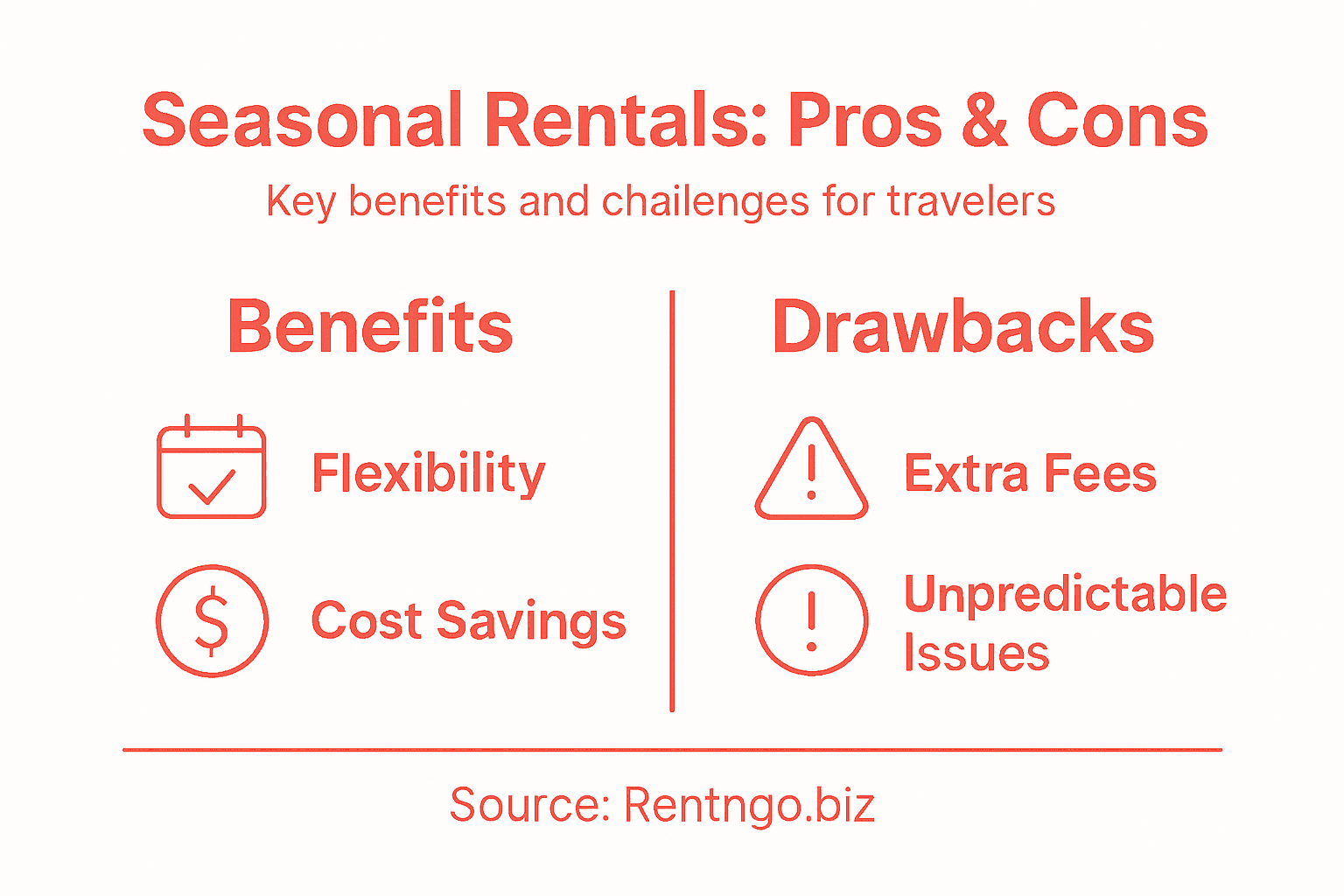
The primary benefits of seasonal rentals include exceptional flexibility, cost-effectiveness, and immersive travel experiences. Travelers gain access to unique properties that provide more space, privacy, and authentic local environments compared to traditional hotel accommodations. Property owners benefit from generating substantial income during peak travel seasons, transforming underutilized spaces into profitable assets. Additionally, seasonal rentals enable travelers to experience destinations more intimately, living like locals and gaining deeper cultural insights that standard accommodations cannot provide.
However, seasonal rentals are not without significant drawbacks. Economic and social challenges can emerge, particularly in popular tourist destinations. Tourism impact studies demonstrate potential negative consequences such as increased local housing prices, reduced availability of residential properties for permanent residents, and potential community disruption. Travelers may encounter risks like inconsistent property quality, unexpected maintenance issues, and less predictable service standards compared to established hotel systems. Furthermore, seasonal rental markets can be highly vulnerable to external factors like economic fluctuations, seasonal weather patterns, and rapidly changing travel regulations.
Pro tip: Research the specific location and read multiple reviews before committing to a seasonal rental to mitigate potential risks and ensure a positive travel experience.
The following table provides an overview of major benefits and drawbacks for both travelers and property owners:
| Group | Key Benefit | Main Drawback |
|---|---|---|
| Travelers | Cost savings, flexible stays | Risk of inconsistent quality |
| Property Owners | Seasonal income opportunities | Vacancy risk, regulatory issues |
Cost Factors and Common Pitfalls
Seasonal rental pricing involves complex economic dynamics that extend far beyond simple nightly rates. Short-term rental regulations reveal nuanced cost considerations that travelers and property owners must carefully navigate, including underlying expenses that can significantly impact overall financial calculations.
Primary cost factors encompass multiple layers beyond the base rental price. Seasonal rentals often include additional expenses such as cleaning fees, service charges, security deposits, and potential maintenance costs. Peak season pricing can fluctuate dramatically, with rates increasing by 200% or more during high-demand periods. Travelers should anticipate supplemental costs like local taxes, insurance fees, utility surcharges, and potential damage protection premiums that can substantially inflate the total rental expense. Property owners must also factor in substantial overhead costs including property maintenance, professional cleaning services, marketing expenses, and potential regulatory compliance investments.
Common pitfalls in seasonal rentals often stem from inadequate financial planning and unexpected complications. Seasonal rental research highlights significant risks such as sudden cancellation penalties, hidden service charges, and potential legal complexities surrounding rental agreements. Travelers might encounter challenges like misleading property descriptions, inconsistent amenity quality, and last-minute price adjustments. Property owners face risks including property damage, extended vacancy periods, increased insurance requirements, and potential local regulatory restrictions that can limit rental opportunities.
Pro tip: Always create a comprehensive budget that includes all potential fees and charges, not just the base rental rate, to avoid financial surprises during your seasonal rental experience.
Discover Smart Seasonal Rentals With Rentngo.biz
Seasonal rentals offer travelers flexibility and cost savings but navigating the complexities of rental agreements and hidden fees can be overwhelming. If you want to enjoy authentic travel experiences without the stress of unpredictable rental quality or last-minute price spikes, exploring trusted transportation options like car rentals and boat tours can elevate your trip.

Take control of your seasonal travel plans today with Rentngo.biz, where you can browse transparent pricing and book your ideal vehicle or leisure rental in just a few clicks. Whether you want the freedom of a car rental to explore at your own pace or a unique adventure on a boat tour, Rentngo.biz offers reliable options that complement your seasonal stay. Act now to secure the best deals, avoid last-minute complications, and make your next vacation truly memorable by visiting our homepage. Ready to enhance your travel flexibility and savings? Start shopping with us now and experience seamless seasonal rentals tailored to your needs.
Frequently Asked Questions
What is a seasonal rental?
Seasonal rentals are short-term leases for accommodations or transportation, typically used by travelers during peak vacation seasons. They offer flexible, temporary access to various properties like vacation homes and vehicles.
What are the benefits of using a seasonal rental?
Seasonal rentals provide travelers with cost-effective options, greater privacy, unique accommodations, and a chance to live more like a local, enhancing the overall travel experience with amenities tailored to personal preferences.
How do seasonal rental agreements work?
Seasonal rental agreements are contracts that outline the terms and conditions for using a property. They include details such as rental duration, costs, payment schedules, and usage restrictions, protecting both property owners and renters.
What should travelers consider when booking a seasonal rental?
Travelers should verify availability dates, read rental agreements carefully, check multiple options, and review past guest feedback to ensure their selected property meets expectations and avoid potential risks.
Recommended
- The Essential Guide to Rentals in Travel – Rent&Go Car Rental Vlore
- What Is a Rental Voucher and How It Saves You Money – Rent&Go Car Rental Vlore
- What Is Short Term Rental? Key Facts for Travelers – Rent&Go Car Rental Vlore
- What Is Rental Duration and Why It Matters – Rent&Go Car Rental Vlore
- Seasonal RV Travel Explained: Benefits, Types, and Tips
Related Posts

7 Essential Budget Travel Rental Tips for Smart Adventures
Rental prices for the same car or boat can differ…

7 Essential Tips for Your Travel Checklist Vlore
Over 40 million American travelers crossed international borders last year,…

Role of Car Rental in Travel: Complete Guide
Over 80 percent of american travelers choose rental vehicles to…