
Many American visitors arrive in Vlore expecting a care-free holiday, only to discover that confusing rental agreements can turn a dream trip into a headache. Rental contracts for vehicles and boats in Albania often differ from those in the United States, and a single overlooked clause could lead to disputes or unexpected charges. With over 60 percent of international travelers reporting post-rental disputes worldwide, understanding these guidelines lets you protect your wallet and enjoy the Albanian coast worry-free.
Table of Contents
- Rental Agreements For Vehicles And Boats
- Main Types Of Short-Term Rental Contracts
- Key Clauses In Rental Agreements Explained
- Your Rights, Obligations, And Liabilities
- Common Mistakes When Signing Rentals
Key Takeaways
| Point | Details |
|---|---|
| Review Rental Agreements Carefully | Tourists must thoroughly understand rental clauses related to insurance, fees, and usage restrictions to avoid complications. |
| Understand Your Rights and Responsibilities | Familiarity with rights and obligations ensures transparent interactions with rental providers. |
| Request Written Contracts | Always obtain a detailed written agreement and, if necessary, a translation to ensure comprehension of all terms. |
| Document Property Condition | Take photographs of the vehicle or boat before and after use to protect against disputed damage claims. |
Rental Agreements for Vehicles and Boats
Understanding the legal nuances of rental agreements for vehicles and boats is crucial for tourists seeking a smooth and hassle-free travel experience. These agreements define the terms of your rental, outline responsibilities, and protect both the renter and the rental company. International maritime transport regulations provide a comprehensive framework that governs these transactions.
Typically, vehicle and boat rental agreements include several key components that tourists must carefully review. These components cover critical aspects such as rental duration, operational control, insurance coverage, and liability limitations. Maritime contract types reveal that agreements can vary significantly depending on the type of vehicle or vessel being rented. For boats, common agreement types include voyage charters, time charters, and bareboat charters, each with distinct operational and legal implications.
When reviewing a rental agreement, pay close attention to specific clauses that address damage protection, usage restrictions, return conditions, and potential additional fees. Boat rentals often have more complex agreements compared to vehicle rentals, particularly when operating in international waters or coastal regions. Key details to examine include:

Here’s a comparison of the main types of vehicle and boat rental agreements:
| Agreement Type | Operational Control | Insurance Involvement | Typical Use Case |
|---|---|---|---|
| Voyage Charter | Renter controls voyage | Owner provides coverage | One-way or specified trips |
| Time Charter | Renter controls timing | Shared responsibility | Flexible itinerary renting |
| Bareboat Charter | Renter has full control | Renter must procure | Experienced, longer-term rental |
| Vehicle Rental | Renter controls vehicle | Owner provides coverage | Short-term local transportation |
- Fuel consumption responsibilities
- Navigation area restrictions
- Required certifications or licenses
- Equipment maintenance requirements
- Damage deposit and insurance terms
- Cancellation and refund policies
Tourists should always request a comprehensive written agreement and thoroughly read all terms before signing. Understanding these details can prevent unexpected complications and ensure a stress-free rental experience.
Pro tip: Always take detailed photographs of the vehicle or boat before departure and upon return, documenting its condition to protect yourself from potential disputed damage claims.
Main Types of Short-Term Rental Contracts
Tourists exploring rental options encounter diverse contract types that vary significantly based on location, property type, and rental purpose. European short-term rental regulations759356_EN.pdf) highlight three primary categories of rental agreements: whole-unit rentals, private room rentals, and shared accommodation arrangements. Each contract type carries unique legal implications and operational guidelines that directly impact travelers’ experiences.
The contractual landscape of short-term rentals is complex, with significant variations across different jurisdictions. Comparative rental contract structures reveal important distinctions between professional and non-professional rental agreements. Professional contracts typically involve established rental businesses with standardized terms, while non-professional agreements might originate from individual property owners seeking additional income through platforms like Airbnb.
The table below outlines differences between professional and non-professional short-term rental contracts:
| Contract Type | Source | Dispute Resolution | Flexibility Level |
|---|---|---|---|
| Professional | Registered businesses | Formal/legal channels | Standardized, less flexible |
| Non-Professional | Private owners/platforms | Informal or platform | More negotiable, variable |
Short-term rental contracts generally encompass several critical components that tourists should carefully examine:
- Duration of stay
- Specific usage restrictions
- Payment terms and conditions
- Cancellation policies
- Security deposit requirements
- Cleaning and maintenance responsibilities
- Additional service fees
Understanding these contract nuances can help travelers make informed decisions, avoid unexpected charges, and ensure a smooth rental experience. Travelers should always request a detailed written agreement and thoroughly review all terms before finalizing their booking.
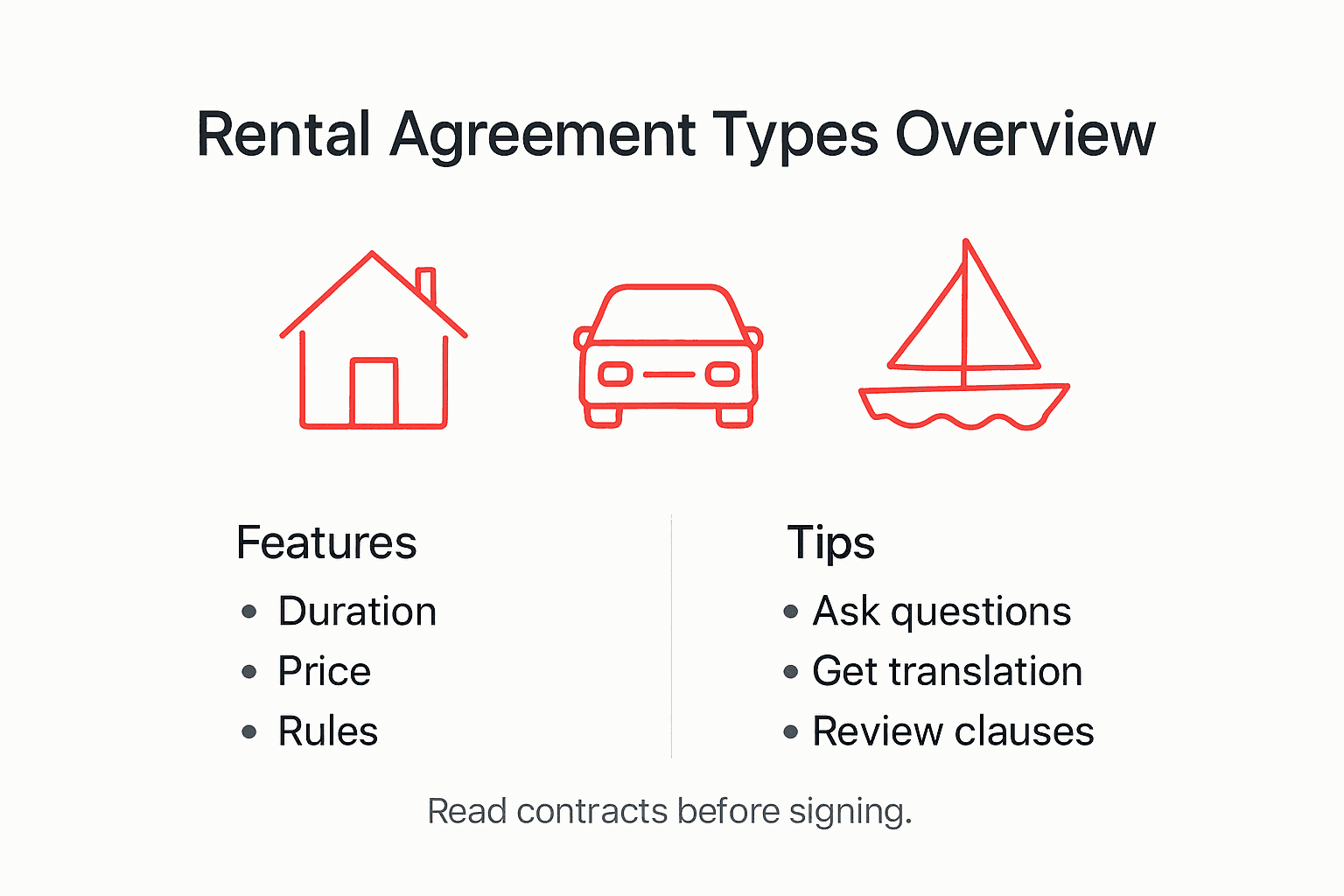
Pro tip: Request a digital copy of the rental contract in advance and use translation services if the document is not in your native language to fully comprehend all terms and conditions.
Key Clauses in Rental Agreements Explained
Navigating the complex landscape of rental agreements requires a thorough understanding of essential contractual components that protect both renters and property owners. Important rental agreement clauses encompass critical elements that tourists must carefully examine before signing any contract. These foundational clauses define the legal relationship between the renter and the rental provider, establishing clear expectations and responsibilities.
The most significant clauses typically address fundamental aspects of the rental arrangement. Essential lease terms cover several key areas that directly impact a tourist’s rental experience:
- Security Deposit: Specifies the amount, conditions for full return, and potential deductions
- Payment Terms: Outlines rent amount, payment methods, due dates, and late payment penalties
- Maintenance Responsibilities: Clarifies obligations of both renter and property owner
- Access Rights: Defines how and when the property owner can enter the rented space
- Termination Conditions: Explains notice periods, early exit penalties, and contract cancellation rules
- Subletting Policies: Indicates whether subleasing is permitted and under what conditions
- Additional Fees: Highlights potential extra charges for services or damages
Understanding these nuanced clauses can help tourists avoid unexpected complications and financial risks. Careful review of each contractual element ensures a transparent and mutually beneficial rental experience, preventing potential misunderstandings or legal disputes.
Pro tip: Always request a comprehensive translation of the rental agreement if it is not in your native language, and consider having a local legal professional review the document before signing.
Your Rights, Obligations, and Liabilities
Tourists embarking on rental experiences must understand the intricate balance of rights, obligations, and potential liabilities that govern their agreements. International standards for tourist protection establish comprehensive guidelines that define the legal framework for rental transactions across different jurisdictions. These standards ensure that both renters and service providers have clear expectations and legal protections.
Comprehensive travel contract guidelines highlight several critical areas of rights and responsibilities that tourists should carefully consider:
-
Renter’s Rights
- Right to safe and habitable rental conditions
- Protection against arbitrary contract termination
- Fair treatment and non-discrimination
- Transparent communication about rental terms
-
Renter’s Obligations
- Timely rent payment
- Proper maintenance of rented property
- Adherence to agreed-upon usage guidelines
- Reporting damages or maintenance issues promptly
-
Liability Considerations
- Personal liability for damages caused
- Insurance requirements
- Potential financial penalties for contract violations
- Responsibility for third-party incidents
Understanding these nuanced aspects helps tourists navigate potential legal complexities and protect their interests during rental experiences. Each rental agreement represents a legal contract with specific rights and responsibilities that require careful review and comprehension.
Pro tip: Take photographs documenting the initial condition of the rental property and retain a dated copy of the signed agreement to protect yourself against potential future disputes.
Common Mistakes When Signing Rentals
Rental agreements can be complex legal documents filled with potential landmines for unsuspecting travelers. Common rental contract pitfalls demonstrate that even experienced travelers can make costly errors when signing rental agreements. Understanding these potential mistakes is crucial for protecting your financial interests and ensuring a smooth rental experience.
Rental agreement mistakes for travelers typically fall into several critical categories:
-
Financial Mistakes
- Paying excessive security deposits
- Failing to negotiate reasonable terms
- Overlooking hidden fees and additional charges
- Not understanding payment schedules
-
Documentation Errors
- Skipping thorough property condition documentation
- Relying on verbal promises instead of written agreements
- Not requesting a comprehensive written contract
- Neglecting to retain copies of signed documents
-
Legal Oversights
- Ignoring key contract clauses
- Failing to understand local rental regulations
- Not checking property compliance with safety standards
- Overlooking termination and penalty conditions
These mistakes can lead to significant financial losses, legal complications, and unnecessary stress during your travel experience. Careful review and understanding of every contractual detail can help prevent potential disputes and protect your interests.
Pro tip: Request a comprehensive, translated contract and consider having a local legal professional review the document before signing to identify any potential red flags or unfavorable terms.
Simplify Your Rental Experience with Rentngo.biz
Navigating the different types of rental agreements can be overwhelming, especially when you need clear terms and reliable service. Whether you are renting a vehicle or booking a boat tour, understanding key clauses like insurance coverage, operational control, and liability can protect you from unexpected surprises. At Rentngo.biz, we know how important it is to have transparency and confidence before you commit.

Take control of your travel plans today by browsing our easy-to-use platform where you can compare rental options, understand all contract details upfront, and reserve with peace of mind. Don’t let complicated agreements slow you down. Visit Rentngo.biz now, explore our car rental services, and secure the perfect ride or boat for your next adventure with full clarity and confidence.
Frequently Asked Questions
What are the main types of rental agreements for vehicles and boats?
The main types of rental agreements for vehicles and boats include voyage charters, time charters, bareboat charters, and standard vehicle rentals. Each type varies in operational control, insurance involvement, and typical use cases.
What should I review in a vehicle or boat rental agreement?
You should carefully review clauses related to damage protection, usage restrictions, return conditions, fuel responsibilities, and cancellation policies. Understanding these elements can help avoid unexpected complications.
How can I protect myself when renting a vehicle or boat?
To protect yourself, take detailed photographs of the vehicle or boat before departure and upon return, document its condition, and request a comprehensive written agreement outlining all terms.
What common mistakes should I avoid when signing a rental agreement?
Common mistakes include overlooking hidden fees, failing to document the property condition, relying on verbal promises instead of written agreements, and not reviewing key contract clauses. Being thorough can help prevent financial losses and legal issues.
Recommended
- Role of Rental Agreements – Safeguarding Rentals Worldwide – Rent&Go Car Rental Vlore
- What Is Short Term Rental? Key Facts for Travelers – Rent&Go Car Rental Vlore
- What Is Rental Duration and Why It Matters – Rent&Go Car Rental Vlore
- Role of Car Rentals in Tourism – Key Impacts and Benefits – Rent&Go Car Rental Vlore
Related Posts

What Is Short Term Rental? Key Facts for Travelers
Over 60 percent of American travelers now consider short-term rentals…

7 Practical Examples of Car Rental Services for Travelers
More than half of urban travelers say flexibility makes or…

The Essential Guide to Rentals in Travel
Over half of american travelers use rentals to enhance flexibility…