
Most American travelers discover that what works at home rarely applies when renting a car abroad. Rental rules differ wildly from country to country, and a missed document or wrongly signed form can ruin a dream trip. With over 60 percent of international tourists reporting confusion about local car rental regulations, stress is common. This guide breaks down the essentials so you can avoid surprises and enjoy seamless travel, whether you are driving in Italy, Australia, or Japan.
Table of Contents
- What Are International Car Rental Rules?
- License, Age, And Document Requirements
- Insurance Coverage And Payment Policies
- Cross-Border Travel And Restrictions Explained
- Hidden Fees, Liability, And Common Pitfalls
Key Takeaways
| Point | Details |
|---|---|
| Documentation is Crucial | Travelers should prepare essential documents like an International Driving Permit, passport, and proof of insurance. Verifying country-specific requirements is vital for a smooth rental experience. |
| Age Requirements Vary | Most regions have minimum age restrictions for rental cars, typically between 21 and 25 years. Companies may charge extra fees for drivers under or over certain age thresholds. |
| Insurance Coverage is Complex | Understanding insurance options and potential hidden fees is essential. Be sure to verify local insurance requirements and coverage to avoid unexpected costs. |
| Cross-Border Restrictions Exist | Rental companies may impose restrictions on cross-border travel, requiring written permission or specific documentation. Always confirm these requirements in advance to ensure compliance. |
What Are International Car Rental Rules?
International car rental rules encompass a complex network of regulations that vary significantly between countries and regions. Understanding these diverse regulatory frameworks is crucial for travelers seeking seamless transportation experiences abroad. Each destination presents unique requirements related to documentation, licensing, insurance, and driving standards that can dramatically impact your rental experience.
The fundamental aspects of international car rental regulations typically involve several critical components. Driver’s License Requirements differ substantially across countries, with some nations demanding an International Driving Permit alongside your standard license. Age Restrictions also play a significant role, with rental companies often imposing minimum and maximum age limits that can range from 21 to 75 years old. Insurance protocols represent another critical area of variation, with mandatory coverage levels and types fluctuating between jurisdictions.
Additionally, international car rental rules address critical aspects like vehicle registration, traffic law compliance, and cross-border travel permissions. European Commission research highlights the complexity of trader practices and consumer rights in global car rental markets. Travelers must carefully review specific country requirements, including potential restrictions on vehicle types, necessary documentation, and potential additional fees or deposits.
Pro tip: Before traveling, contact your rental company and verify specific country requirements at least two weeks in advance to ensure smooth documentation and compliance with local regulations.
License, Age, and Document Requirements
Navigating international car rental requirements demands careful attention to licensing, age restrictions, and essential documentation. Global car rental legal requirements encompass a complex landscape of regulations that vary dramatically across different countries and regions. Travelers must understand these nuanced requirements to ensure smooth and legal vehicle rental experiences.
Driver’s licensing presents one of the most critical considerations for international car rentals. International Driving Permits are frequently mandatory, requiring travelers to obtain an additional certification beyond their standard national driver’s license. Minimum driving age restrictions differ significantly worldwide, typically ranging between 21 and 25 years old. Some rental companies impose additional surcharges for drivers under 25 or over a certain age threshold, making it essential to verify specific regional requirements in advance.
Documentation requirements extend far beyond simple licensing. Travelers must typically prepare a comprehensive package including their passport, valid driver’s license, proof of insurance, and often a credit card for security deposits. Some countries require additional documentation such as visa information, international travel insurance, and vehicle registration papers. Understanding these specific requirements can prevent potential rental complications and ensure a seamless travel experience.
Pro tip: Create a digital and physical backup of all your essential travel documents, including driver’s license, passport, and international driving permit, and store them separately to protect against potential loss or theft.
Here’s how key international car rental requirements differ by region:
| Region | Minimum Age | License Needed | Common Extra Docs |
|---|---|---|---|
| Europe | 21-25 yrs | International Permit often | Passport, credit card |
| North America | 21-25 yrs | National License usually | Insurance proof, passport |
| Asia | 18-21 yrs | International Permit often | Travel visa, registration |
| Australia/NZ | 21 yrs | National or international | Credit card, insurance proof |
Insurance Coverage and Payment Policies
International rental car insurance represents a complex landscape of protection strategies that vary dramatically across different regions and rental providers. Understanding these intricate coverage options is crucial for travelers seeking comprehensive protection during their international journeys. The fundamental goal is to mitigate financial risks associated with potential vehicle damage, accidents, and unexpected incidents while traveling abroad.

Most international rental agreements include several standard Insurance Types that travelers must carefully evaluate. Collision Damage Waiver (CDW) typically covers damage to the rental vehicle, while Liability Protection addresses potential third-party injury or property damage claims. Consumer rights frameworks highlight that payment policies can significantly impact overall insurance coverage, with many companies requiring credit card deposits and offering tiered protection levels. Some countries mandate specific minimum insurance coverages, making it essential to research local requirements before finalizing a rental agreement.
Payment policies often interconnect closely with insurance requirements, creating a complex web of financial considerations for international travelers. Credit card coverage, personal auto insurance, and additional travel insurance can provide supplemental protection, but understanding the exact terms and limitations is critical. Many rental companies offer optional insurance add-ons that can provide enhanced protection beyond standard packages, though these additional coverages can substantially increase the overall rental cost.
Pro tip: Contact your personal auto insurance provider and credit card company before traveling to understand existing international car rental coverage, potentially saving hundreds of dollars on redundant insurance purchases.
Cross-Border Travel and Restrictions Explained
Cross-border car rental involves navigating a complex network of international regulations that can significantly impact travelers’ mobility and transportation strategies. International Border Crossing requirements demand meticulous preparation and understanding of various legal and logistical challenges. Rental companies impose specific restrictions to manage potential risks associated with vehicles traveling between different countries, making comprehensive research essential for seamless travel experiences.
Most rental agreements include specific Cross-Border Restrictions that travelers must carefully evaluate before planning their journey. These restrictions typically involve additional documentation, potential extra fees, and geographical limitations on vehicle movement. Some rental companies require explicit written permission for cross-border travel, while others may completely prohibit taking rental vehicles across certain national boundaries. Travelers must obtain comprehensive information about permitted travel routes, potential insurance implications, and specific regional regulations that could impact their rental agreement.
Key considerations for cross-border car rental include verifying vehicle insurance coverage, understanding potential additional fees, and preparing necessary documentation. Rental companies often require travelers to provide detailed travel itineraries, additional identification documents, and proof of return intentions. Some regions enforce strict regulations regarding vehicle movement, including mandatory vehicle inspections, temporary import permits, and specific insurance requirements that can vary dramatically between neighboring countries.
Pro tip: Contact your rental company at least two weeks before your trip to obtain explicit written permission and detailed documentation requirements for cross-border travel, ensuring a smooth and legally compliant international journey.
Hidden Fees, Liability, and Common Pitfalls
International car rental hidden fees represent a significant financial risk that can dramatically increase travelers’ expenses beyond initial quoted prices. Rental companies often employ complex pricing structures designed to maximize additional revenue through unexpected charges. Understanding these potential financial traps is crucial for budget-conscious travelers seeking transparent and predictable transportation solutions.
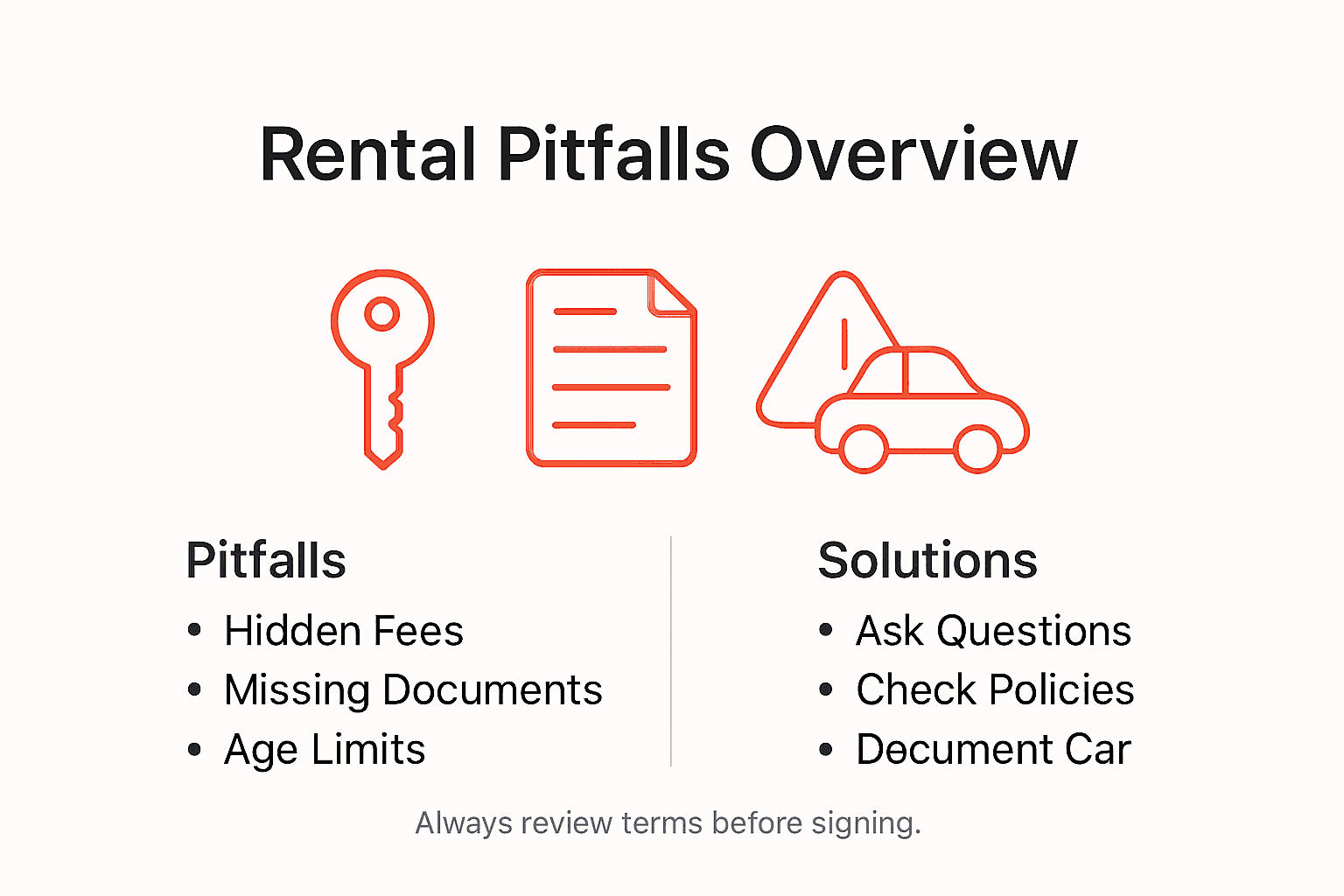
The most common hidden fees emerge through several strategic mechanisms. Damage Liability can create substantial financial exposure, with rental companies imposing significant charges for even minor vehicle imperfections. European rental fee structures frequently include complex fuel policies, mileage limitations, additional driver fees, and extensive insurance excess charges. Travelers must carefully scrutinize rental agreements, paying special attention to potential surcharges for late returns, cross-border travel, additional equipment, and unexpected maintenance claims.
Liability considerations extend beyond immediate financial risks, potentially involving legal complications in foreign jurisdictions. Rental agreements often include intricate clauses that transfer substantial risk to the traveler, including responsibility for vehicle damage, theft, and potential legal proceedings. Some companies require extensive documentation and impose strict conditions for claim resolution, making comprehensive understanding of contractual obligations essential. Additional potential pitfalls include unexpected cleaning fees, GPS or navigation equipment charges, and complex deposit return policies that can tie up significant amounts of travelers’ funds.
This table summarizes common types of hidden fees and liability risks:
| Fee Type | Example Charge | Impact on Traveler |
|---|---|---|
| Damage Liability | Minor scratch fees | Possible large extra costs |
| Extra Equipment | GPS device fee | Unexpected daily charges |
| Mileage Limitation | Exceeding limit penalty | Higher end-trip bill |
| Cleaning Fee | Excessive dirt charge | Non-refundable expense |
Pro tip: Photograph the entire rental vehicle’s exterior and interior immediately upon pickup, documenting every existing scratch or imperfection, and request written acknowledgment from the rental agent to protect yourself from unjustified damage claims.
Simplify Your International Car Rental Experience with Rentngo.biz
Navigating complex international car rental rules can be overwhelming with varying license requirements, age limits, and insurance complexities. Whether you need clarity on cross-border travel restrictions or want to avoid common pitfalls like hidden fees and liability issues, Rentngo.biz offers a seamless solution tailored for travelers like you. Our easy-to-use platform helps you browse, compare, and book vehicles confidently, ensuring your rental meets country-specific regulations and provides transparent pricing.

Take charge of your international journey today by exploring our reliable and straightforward car rental options available at Rentngo.biz. Don’t let confusing rules hold you back. Start your hassle-free booking now to enjoy peace of mind and focus on your travel adventure.
Frequently Asked Questions
What are the essential documents needed for international car rentals?
Travelers typically need their passport, valid driver’s license, proof of insurance, and a credit card for security deposits. Some countries may also require additional documentation such as visa information and international driving permits.
Are there age restrictions for renting a car internationally?
Yes, most rental companies impose minimum age restrictions that usually range from 21 to 25 years old. Additional fees may apply for drivers under 25 or over a certain age threshold.
What types of insurance should I consider when renting a car abroad?
Essential insurance types include Collision Damage Waiver (CDW) for vehicle damage and Liability Protection for third-party claims. It’s important to understand the local minimum insurance requirements before booking your rental.
What should I do to avoid hidden fees when renting a car internationally?
To avoid hidden fees, carefully read the rental agreement and inquire about potential charges like damage liability, cleaning fees, and fuel policies. Document the vehicle’s condition upon pickup to protect against unjustified damage claims.
Recommended
- 7 Essential Rental Vehicle Safety Tips for Travelers – Rent&Go Car Rental Vlore
- Why Rent a Car for Travel: Flexibility and Savings – Rent&Go Car Rental Vlore
- Role of Insurance in Car Rentals: Complete Guide – Rent&Go Car Rental Vlore
- Role of Car Rentals in Tourism – Key Impacts and Benefits – Rent&Go Car Rental Vlore
Related Posts

Role of Car Rentals in Tourism – Key Impacts and Benefits
Most American tourists choose car rentals as their top travel…

Rental Vehicle Categories: Maximizing Travel Comfort
More than 60 percent of international travelers admit to confusion…

Best 5 Car Rental Options for Travelers – Expert Comparison 2025
Planning your next trip often means juggling choices where the…