
Most travelers are surprised to learn that over 60 percent of American and international visitors rely on leisure rentals for flexible access during coastal adventures. Choosing the right vehicle or boat tour affects how easily you can explore, relax, or plan a spontaneous getaway. This overview uncovers common misunderstandings about leisure rentals, highlights diverse activity options, and explains practical booking steps that help travelers feel confident and prepared.
Table of Contents
- Defining Leisure Rentals And Common Misconceptions
- Types Of Leisure Rentals And Their Uses
- Booking Process And Key Features Explained
- Legal Guidelines And Insurance Requirements
- Costs, Liabilities, And How To Avoid Pitfalls
Key Takeaways
| Point | Details |
|---|---|
| Understanding Leisure Rentals | Leisure rentals provide flexible access to vehicles and recreational equipment, catering to diverse consumer needs and varying by region. |
| Booking Considerations | Users should evaluate booking platforms for features like real-time availability, insurance options, and user reviews to enhance rental experiences. |
| Legal and Insurance Aspects | Familiarity with local regulations and comprehensive insurance is essential to protect against unexpected liabilities in leisure rentals. |
| Cost Management | Renters must carefully assess all costs, including hidden fees and potential liabilities, to avoid unexpected financial burdens during rentals. |
Defining Leisure Rentals and Common Misconceptions
Leisure rentals represent flexible transportation and recreational options allowing individuals to temporarily access vehicles, watercraft, and equipment for personal enjoyment. These services provide temporary ownership experiences without long-term commitment, enabling travelers and locals to explore destinations more freely. Examining rental trends through interdisciplinary research reveals that leisure rentals are far more complex than simple transactional exchanges.
Contrary to popular belief, leisure rentals are not just about acquiring transportation but represent a nuanced ecosystem of consumer experiences. Many people mistakenly assume these services are uniform across different regions or cultures. However, rental preferences and availability vary significantly based on local infrastructure, tourism patterns, and economic conditions. Short-term rentals can range from basic economic vehicles to luxury boats, each serving distinct market segments with unique expectations and requirements.
The landscape of leisure rentals encompasses multiple categories, including vehicle rentals, boat tours, recreational equipment, and specialized transportation solutions. These services cater to diverse needs such as tourism, temporary mobility, special events, and personal exploration. Potential renters should understand that each rental option comes with specific rules, insurance requirements, and operational guidelines that protect both the service provider and the customer. Understanding short-term rental dynamics can help travelers make more informed decisions about their transportation and recreational choices.
Pro Tip: Always thoroughly review rental agreements and understand insurance coverage before finalizing any leisure rental transaction to prevent unexpected complications or additional expenses.
Types of Leisure Rentals and Their Uses
Leisure rentals encompass a diverse range of transportation and recreational options designed to meet different user needs and preferences. The Serious Leisure Perspective reveals multiple categories of rental experiences that extend far beyond simple vehicle or equipment borrowing. These categories include casual leisure rentals for spontaneous activities, project-based rentals for specific endeavors, and more specialized options tailored to specific recreational pursuits.

The landscape of leisure rentals is incredibly varied, spanning multiple domains and serving distinct market segments. Vehicle rentals represent a primary category, including cars, motorcycles, boats, and recreational vehicles that enable travelers to explore destinations independently. Recreational equipment rentals cover everything from water sports gear like kayaks and surfboards to winter sports equipment such as skis and snowboards. Research on recreational activity inventories demonstrates the complex global classification of these rental models, highlighting the intricate ways different cultures approach temporary equipment access.
Beyond traditional transportation, leisure rentals now include specialized categories like photography equipment, professional event gear, scientific instruments, and even artistic tools. These rentals democratize access to expensive or specialized equipment, allowing individuals to pursue hobbies, professional projects, or one-time experiences without significant financial investment. Understanding travel rental options can help travelers and recreational enthusiasts make more informed choices about their temporary equipment needs.
Pro Tip: Always compare multiple rental providers and carefully review their specific terms, insurance options, and equipment condition before making a final rental selection.
Here’s a summary of common leisure rental types and their primary uses:
| Rental Category | Typical Use | Key Consideration |
|---|---|---|
| Vehicles | Travel, tourism, mobility | Fuel policy, insurance options |
| Equipment | Sports, adventure, events | Condition, damage deposit |
| Specialty Gear | Projects, pro events, hobbies | Specialized support, training |
| Watercraft | Exploration, recreation | Safety standards, permits |
Booking Process and Key Features Explained
Online leisure rental bookings have evolved into sophisticated digital experiences that prioritize user convenience and transparency. Critical research on online booking information reveals complex user decision-making processes, highlighting the importance of clear, comprehensive information presentation. Modern booking platforms typically offer intuitive interfaces that allow potential renters to quickly compare options, view detailed specifications, and understand pricing structures.
The typical leisure rental booking process involves several key stages designed to streamline user experience. First, users select their desired rental category, such as vehicles, boats, or specialized equipment. Next, they input specific parameters like rental duration, desired dates, and any additional requirements. Advanced filtering systems enable renters to narrow down options based on price range, equipment specifications, location, and availability. Many platforms now incorporate real-time availability tracking, allowing instant confirmation and reducing potential booking conflicts.
Security and trust play pivotal roles in the modern rental booking ecosystem. Effective rental booking platforms integrate multiple verification methods, including user reviews, equipment condition reports, and transparent pricing structures. Key features often include comprehensive insurance options, flexible cancellation policies, and detailed equipment descriptions. Some platforms now offer additional services like equipment delivery, on-site support, and comprehensive safety instructions to enhance overall user experience and build consumer confidence.
Pro Tip: Always screenshot your booking confirmation and carefully review the rental agreement’s fine print to understand exactly what’s included in your rental package.
Compare how major booking platform features impact renter experience:
| Platform Feature | User Convenience | Potential Business Benefit |
|---|---|---|
| Real-time availability | Immediate confirmations | Fewer booking conflicts |
| User reviews & ratings | Trusted decision-making | Higher customer retention |
| Flexible cancellation | Lower financial risk | Increased booking volume |
| Equipment delivery options | No transport needed | Greater service differentiation |
Legal Guidelines and Insurance Requirements
Legal regulations surrounding leisure rentals represent a complex framework of rules designed to protect both service providers and consumers. These guidelines encompass multiple dimensions, including licensing requirements, safety standards, operational protocols, and comprehensive insurance mandates. Different regions worldwide maintain unique regulatory approaches, making it crucial for renters and providers to understand local legal specifications before engaging in any rental transaction.
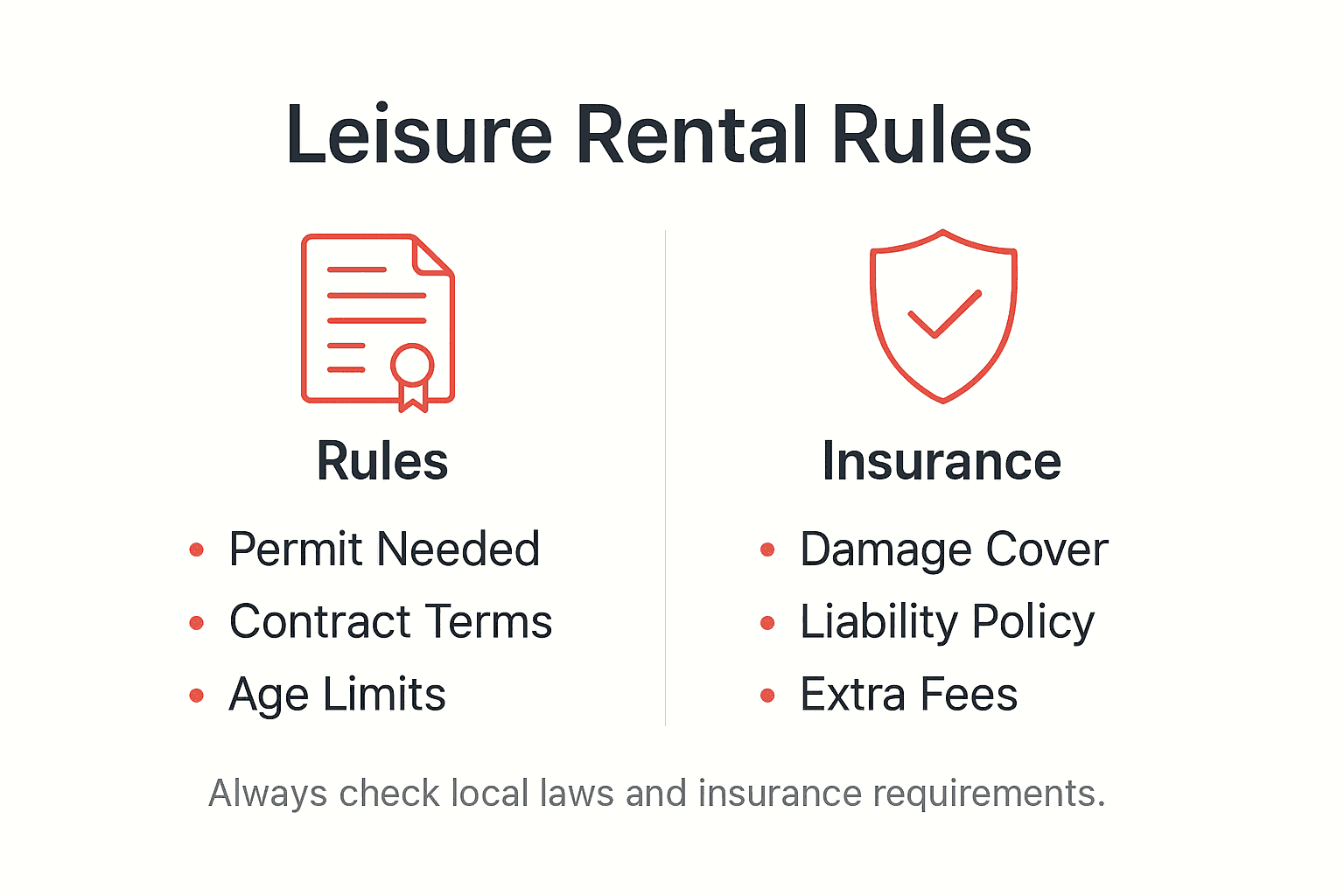
Insurance requirements form a critical component of leisure rental operations. Public liability insurance protects businesses against potential claims arising from accidents or damages during equipment use. Comprehensive short-term rental legal guidelines recommend multiple layers of coverage, including property damage protection, personal injury coverage, and specialized equipment insurance. Renters should carefully review insurance terms, understanding exactly what scenarios are covered and what potential financial risks remain their responsibility.
Regional variations significantly impact legal and insurance requirements for leisure rentals. Some jurisdictions mandate specific permits for rental operations, while others require detailed income reporting and strict data protection compliance. Rental platforms must navigate these complex regulatory landscapes, ensuring they meet local legal standards while providing transparent information to potential customers. Understanding rental regulations helps consumers make informed decisions and avoid potential legal complications.
Pro Tip: Always request and carefully review a complete copy of insurance documentation before finalizing any leisure rental to understand your exact coverage and potential liability.
Costs, Liabilities, and How to Avoid Pitfalls
Cost management represents a critical aspect of leisure rentals, requiring careful navigation of complex financial landscapes. Professional legal advisories highlight numerous potential financial pitfalls that renters must understand to protect their financial interests. Rental expenses extend beyond basic pricing, encompassing additional fees such as insurance premiums, potential damage deposits, fuel charges, equipment cleaning fees, and potential penalty costs for late returns or contract violations.
Liability considerations form another crucial dimension of leisure rental transactions. Renters must thoroughly understand their financial and legal responsibilities, which can vary dramatically between different rental categories and geographic regions. Comprehensive risk assessment involves analyzing potential scenarios like equipment damage, personal injury, third-party liability, and unexpected maintenance costs. Some rental agreements include complex clauses that shift significant financial risk onto the renter, making meticulous contract review essential before finalizing any rental agreement.
To mitigate potential financial risks, travelers should adopt strategic approaches to rental selection and contract management. Understanding rental regulations can help consumers identify potential hidden costs and complex liability structures. Recommended strategies include documenting equipment condition before rental, photographically recording existing damages, understanding comprehensive insurance options, and maintaining transparent communication with rental providers about potential risk scenarios.
Pro Tip: Always request a detailed written breakdown of all potential fees and create a comprehensive checklist of equipment condition before finalizing your rental to protect yourself from unexpected financial liabilities.
Discover Easy and Reliable Leisure Rentals with Rentngo.biz
Navigating the complex world of leisure rentals can feel overwhelming with all the insurance rules, liability concerns, and varying rental types. Whether you are searching for flexible vehicle rentals, exciting boat tours, or specialized recreational equipment, Rentngo.biz simplifies your journey. Our easy-to-use platform helps you compare options, understand key costs, and book with confidence so you can enjoy your leisure time worry-free.

Don’t let confusing rental agreements or hidden fees hold you back from your next adventure. Visit Rentngo.biz now to explore vehicle rentals, boat tours, and comprehensive leisure solutions. Use our clear booking process, transparent pricing, and real-time availability to make informed choices today and avoid common pitfalls highlighted in “Leisure Rentals Explained: Options, Benefits, and Rules”. Get started on your next trip with security and convenience only a trusted platform can provide.
Frequently Asked Questions
What are leisure rentals?
Leisure rentals refer to flexible transportation and recreational options that allow individuals to temporarily access vehicles, watercraft, and equipment for personal enjoyment without long-term commitment.
How do I book a leisure rental?
Booking a leisure rental typically involves selecting a rental category, inputting specific parameters like rental duration and dates, and using advanced filtering systems to find the desired options on a digital platform.
What should I consider regarding insurance for leisure rentals?
It’s crucial to review the insurance terms for leisure rentals. Look for coverage that protects against potential damages and personal liability, and understand what scenarios are covered to avoid unexpected financial risks.
How can I avoid hidden costs in leisure rentals?
To avoid hidden costs, always request a detailed breakdown of all potential fees, compare rental agreements carefully, document equipment conditions before rental, and communicate transparently with providers about potential risk scenarios.
Recommended
- Why Use Local Rental Services for Leisure Travel – Rent&Go Car Rental Vlore
- What Is Rental Duration and Why It Matters – Rent&Go Car Rental Vlore
- What Is Boat Rental? Complete Overview for Travelers – Rent&Go Car Rental Vlore
- Why Choose Local Vehicle Rentals: Complete Guide – Rent&Go Car Rental Vlore
Related Posts

What Is Rental Duration and Why It Matters
Most American travelers do not realize how much their trip…
What Is Boat Rental? Complete Overview for Travelers
Over 13 million american households participate in boating activities each…

What Is One-Way Car Hire and Why Travelers Choose It
Over half of American travelers are choosing flexible car hire…