
Most American travelers in Vlore run into confusion when choosing between car hire and car rental, especially as both terms often appear side by side. Over 60 percent of tourists misinterpret local vehicle service terminology, risking unexpected costs and hassle during their trip. If you want to avoid surprises and pick the best transport for your journey, knowing these subtle distinctions will help you make smarter, stress-free travel decisions.
Table of Contents
- Defining Car Hire and Car Rental Terms
- Regional Differences and Common Misconceptions
- Booking Processes and Rental Agreements Explained
- Cost Structures, Insurance, and Hidden Charges
- When to Choose Hire vs Rental for Travel
Key Takeaways
| Point | Details |
|---|---|
| Understanding Terminology | Distinctions between “car hire” and “car rental” vary by region, influencing traveler decisions and expectations. |
| Booking Clarity | Always clarify terms of service and rental agreements to avoid surprises and ensure smooth vehicle usage. |
| Cost Awareness | Be vigilant of potential hidden charges and additional fees that can significantly increase overall rental costs. |
| Selecting Services | Choose between hire and rental based on travel needs, trip duration, and destination characteristics for optimal mobility. |
Defining Car Hire and Car Rental Terms
Understanding transportation terminology is crucial for travelers navigating vehicle acquisition options. While car hire and car rental might seem interchangeable, they carry nuanced differences that impact your travel experience. Linguistic variations across regions reveal these subtle distinctions in vehicle acquisition practices.
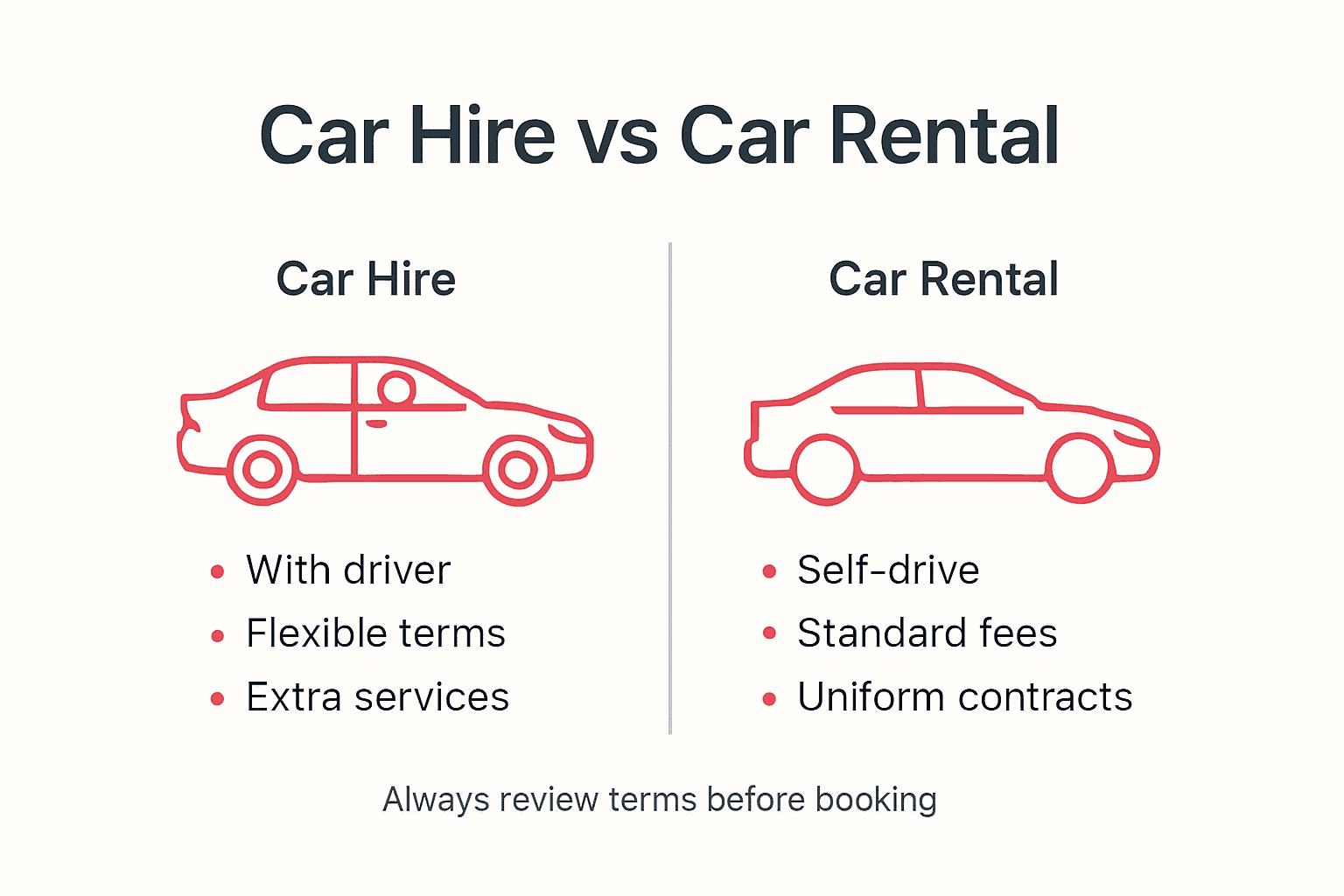
In North American contexts, car rental predominantly refers to self-drive agreements where travelers independently operate a rented vehicle for a specific duration. Conversely, international terminology often uses “car hire” more broadly, potentially including options with or without a dedicated driver. This semantic flexibility means travelers must carefully review contract specifics to understand exact service parameters.
The practical differences extend beyond language. Car rental typically involves straightforward vehicle procurement from commercial agencies, while car hire can encompass more varied arrangements. These might include short-term personal vehicle usage, corporate fleet management, or specialized transportation services. Geographic location significantly influences these definitional subtleties, with British English favoring “hire” and American English preferring “rental”.
Regional preferences create interesting variations in service structures. Some markets treat these terms as functional synonyms, while others maintain distinct operational frameworks. Understanding these nuanced differences helps travelers make informed transportation decisions tailored to their specific mobility requirements.
Here’s how car hire and car rental differ across key aspects:
| Aspect | Car Hire | Car Rental |
|---|---|---|
| Common Regions | UK, Australia | United States |
| Driver Provided | Often optional | Usually self-drive only |
| Typical Uses | Chauffeur, business fleets | Leisure, personal trips |
| Contract Flexibility | Frequently customizable | Standardized terms |
Pro Tip: Always clarify service terms before booking. Request explicit details about vehicle usage, included services, and potential driver arrangements to avoid misunderstandings.
Regional Differences and Common Misconceptions
The automotive rental landscape varies dramatically across different global markets, creating a complex web of terminology and service models. International research on car rental practices reveals significant disparities in how different regions approach vehicle acquisition and usage.
In the United States, car rental remains predominantly a self-drive experience with standardized commercial models. European and Australian markets tend to offer more flexible arrangements, including options for driver-included services and varied rental durations. These regional nuances mean travelers cannot assume uniform service standards across different countries, making pre-trip research essential for smooth transportation planning.

Common misconceptions often arise from linguistic and operational differences. Many travelers mistakenly believe “car hire” and “car rental” represent identical services, when in reality, they can encompass substantially different contractual arrangements. Some regions treat these terms as pure synonyms, while others maintain distinct legal and operational frameworks that significantly impact vehicle usage, insurance coverage, and overall travel logistics.
The global automotive rental market demonstrates remarkable complexity, with each region developing unique approaches shaped by local transportation infrastructure, legal regulations, and cultural preferences. Understanding these subtle distinctions helps travelers navigate potential pitfalls and select the most appropriate transportation solution for their specific needs.
Pro Tip: Research Local Variations: Always investigate specific rental terms and conditions for your destination country to avoid unexpected surprises during your travel.
Booking Processes and Rental Agreements Explained
The modern car rental industry has transformed dramatically with digital technologies, revolutionizing how travelers secure transportation. Comprehensive car hire procedures now leverage sophisticated online reservation systems that streamline the entire booking experience from selection to confirmation.
Typical booking processes involve several critical steps. Travelers first select their desired vehicle category, input travel dates, and provide necessary identification and payment details. Digital rental management systems now automate authentication, payment processing, and agreement generation, significantly reducing manual intervention and potential human error. Most platforms require a valid driver’s license, credit card for security deposit, and proof of insurance or optional coverage selection.
Rental agreements represent legally binding contracts that outline specific terms of vehicle usage. These documents typically include crucial details such as rental duration, mileage limitations, return conditions, insurance coverage, and potential additional fees. Variations exist across different rental agencies and geographic regions, making it essential for travelers to carefully review all contractual terms before finalizing their reservation.
The digitalization of rental processes has introduced unprecedented transparency and convenience. Advanced platforms now offer real-time vehicle tracking, instant booking confirmations, and comprehensive digital documentation that can be accessed and reviewed instantly. This technological evolution has dramatically simplified what was once a complex and time-consuming transaction.
Pro Tip: Digital Document Review: Always download and carefully read the entire rental agreement before your trip, noting specific terms, potential additional charges, and your responsibilities as a renter.
Cost Structures, Insurance, and Hidden Charges
Navigating the complex landscape of car rental pricing requires careful attention to multiple financial layers beyond the base rental rate. Base rates typically represent just the starting point, with numerous additional charges potentially inflating the final cost. One-way rental fees, young driver surcharges, additional driver expenses, and geographic zone variations can dramatically impact the total price travelers will ultimately pay.
Insurance represents another critical financial consideration in vehicle rentals. Most agencies offer multiple coverage tiers, ranging from minimal protection to comprehensive plans. Travelers must carefully evaluate their existing auto insurance and credit card benefits to determine appropriate additional coverage. Common insurance options include collision damage waivers, liability protection, personal accident insurance, and supplemental liability protection. Each option carries different cost implications and levels of risk mitigation.
Hidden charges frequently surprise unsuspecting travelers and can significantly increase rental expenses. These unexpected costs might include airport pickup fees, late return penalties, fuel replacement charges, and cleaning fees. Some rental companies implement complex pricing structures that bundle services or charge incremental rates based on mileage, vehicle type, and rental duration. Understanding these potential additional expenses requires meticulous review of the rental agreement and asking explicit questions before finalizing the reservation.
Technology has introduced more transparency into rental pricing, but complexity remains. Online comparison tools and detailed digital agreements help travelers better understand potential costs. However, the variability between rental agencies means travelers must remain vigilant and proactively investigate all potential charges associated with their specific rental arrangement.
This table summarizes typical extra costs travelers should anticipate:
| Charge Type | Description | Mitigation Strategy |
|---|---|---|
| One-way Fee | Dropping car at different location | Check return options upfront |
| Young Driver Surcharge | Extra fee for under 25 | Add older driver if possible |
| Fuel Charges | Cost for missing fuel | Refuel before return |
| Cleaning Fee | Fee for excessive dirt | Return car clean |
| Airport Location Fee | Added charge for airport pickup | Compare with city locations |
Pro Tip: Cost Comparison Strategy: Always request a complete breakdown of all potential charges before booking, and compare total costs across multiple rental agencies to ensure the most economical option.
When to Choose Hire vs Rental for Travel
Travel-specific transportation strategies demand nuanced understanding of mobility options, particularly when determining whether to choose car hire or traditional car rental. The decision hinges on multiple factors including trip duration, destination complexity, and specific travel requirements that extend beyond simple transportation needs.
Business travelers often benefit from car hire services that provide more comprehensive solutions, such as vehicles with drivers or specialized fleet management. These arrangements work exceptionally well for professionals needing consistent transportation, attending multiple meetings, or traveling in unfamiliar metropolitan areas. Conversely, leisure travelers typically prefer standard car rental options that offer greater personal control, allowing independent exploration and flexible itinerary management.
Geographic context plays a significant role in selection. Remote destinations with limited public transportation infrastructure frequently require full vehicle control, making self-drive rentals more practical. Urban environments might offer more diverse transportation alternatives, potentially reducing the necessity of personal vehicle acquisition. Factors like local driving regulations, parking availability, and transportation network complexity further influence the hire versus rental decision.
Understanding personal travel patterns helps optimize transportation choices. Solo travelers might prefer compact rental vehicles, while group travelers could benefit from hire services offering larger vehicles or professional drivers. The key is matching transportation strategy with specific journey requirements, budget constraints, and individual comfort levels.
Pro Tip: Destination Assessment: Always research local transportation infrastructure and driving conditions before selecting between car hire and rental to ensure the most suitable mobility solution for your specific travel needs.
Choose the Right Vehicle Solution for Your Travel Needs Today
Travelers often face confusion deciding between car hire and car rental because of differing terminology and service options across regions. This article highlights how understanding these terms impacts your journey and how important it is to clarify service details before booking. Whether you want a self-drive vehicle or a chauffeured experience, avoiding hidden fees and contract surprises is crucial for stress-free travel.
At Rentngo.biz, we simplify this process by offering clear, upfront choices for car rentals tailored to your preferences and travel style. Browse our easy-to-navigate platform to compare vehicles, pricing, and service terms so you can make a confident decision that matches your itinerary and budget.

Ready to take control of your transportation without the guesswork? Visit Rentngo.biz now to explore your options and secure your ideal vehicle hassle-free. Experience streamlined bookings, transparent pricing, and expert support all in one place. Don’t wait until your trip starts to face confusion—plan ahead with us and travel smart!
Frequently Asked Questions
What is the primary difference between car hire and car rental?
Car hire often includes options with or without a driver and encompasses more varied arrangements, while car rental typically refers to self-drive agreements for personal use.
When should I choose car hire over car rental?
Choose car hire when you need a comprehensive transportation solution, such as a vehicle with a driver or a specialized fleet, especially for business or complex travel needs. Car rental is better for independent travelers wanting direct control over their itinerary.
How do insurance options differ between car hire and car rental?
Both car hire and car rental agencies offer various insurance coverage options, but the specifics may vary widely. It’s essential to evaluate your existing auto insurance and credit card benefits to determine the appropriate coverage needed for each type of service.
What are some common hidden charges in car rentals?
Common hidden charges may include airport pickup fees, young driver surcharges, fuel replacement charges, and late return penalties. Always review the rental agreement carefully to identify potential additional costs.
Recommended
- Why Rent a Car for Travel: Flexibility and Savings – Rent&Go Car Rental Vlore
- Role of Car Rental in Travel: Complete Guide – Rent&Go Car Rental Vlore
- Role of Car Rentals in Tourism – Key Impacts and Benefits – Rent&Go Car Rental Vlore
- What Is One-Way Car Hire and Why Travelers Choose It – Rent&Go Car Rental Vlore
- Everything You Need To Know About Driving In Costa Rica | Costa Rica Waterfall Tours
- Top Flughafentaxi Alternativen – Vergleich 2025
Related Posts

Why Rent a Car for Travel: Flexibility and Savings
More than half of American travelers say flexibility is the…

7 Essential Family Travel Tips for Exploring Vlore
Over eighty percent of American families report that early travel…

How to Rent for Adventures: Secure Cars and Boats Easily
Bold travelers know that over 80 percent of American adventure…