
Most American travelers do not realize how much their trip budget can shift based on rental duration. Choosing between hourly, daily, or extended rentals impacts not just flexibility but also total costs, with rates sometimes dropping by over 30 percent for longer bookings. Whether you are planning a weekend getaway or a month-long road trip, understanding how rental timeframes shape pricing, policies, and penalties ensures you make confident, cost-effective choices every time.
Table of Contents
- Rental Duration Defined For Rentals And Tours
- Types Of Rental Duration: Hourly Vs. Daily
- How Rental Periods Work In Practice
- Rules, Restrictions, And Extensions Explained
- Costs, Penalties, And Booking Tips
Key Takeaways
| Point | Details |
|---|---|
| Understand Rental Duration | Rental duration specifies the timeframe for usage, influencing costs and expectations. Confirm exact start and end times in the contract to avoid surprises. |
| Choose Between Hourly and Daily Rentals | Hourly rentals are best for short trips, while daily rentals are suited for extended travel. Assess your trip length and needs to select the most cost-effective option. |
| Review Charges and Penalties | Familiarize yourself with pricing structures and potential fees, including mileage overages and late returns. Always read the fine print before finalizing your rental. |
| Document Condition of Rental | Take timestamped photos of the rental’s condition before and after use to protect against unwarranted damage claims. |
Rental Duration Defined for Rentals and Tours
Rental duration represents the specific timeframe during which a customer can use a rented item, whether it’s a vehicle, boat, or tour experience. At its core, rental duration determines the legal and financial boundaries of a rental agreement, establishing precise parameters for usage, cost, and expectations. Understanding rental duration helps travelers and businesses negotiate clear, mutually beneficial arrangements.
Typically, rental durations can vary dramatically based on the type of service. A short-term rental might encompass just a few days, perfect for tourists seeking temporary transportation or accommodation. In contrast, some rentals extend for weeks or even months, providing more extended access to vehicles or equipment. The rental agreement will specify exact start and end times, including potential penalties for early returns or late check-ins.
Rental duration impacts pricing structures significantly. Most rental services calculate costs based on the total rental period, with rates potentially decreasing for longer rental windows. Factors like seasonal demand, vehicle type, and local market conditions can influence these pricing models. Customers should carefully review rental terms, understanding not just the base rate but also potential additional fees for mileage, insurance, or extended usage.

Pro Tip for Smart Renters: Always confirm the precise start and end times of your rental duration in the contract, including specific pickup and return locations, to avoid unexpected charges or complications.
When selecting a rental, consider your exact needs and compare different duration options. Some services offer flexible rental periods, allowing you to adjust your timeframe based on changing travel plans. Always read the fine print and ask questions about the specific terms of your rental duration.
Types of Rental Duration: Hourly vs. Daily
Rental durations typically fall into two primary categories: hourly and daily rentals, each designed to accommodate different traveler needs and budget constraints. Hourly rentals offer maximum flexibility, allowing customers to rent vehicles or equipment for short periods, while daily rentals provide extended access for more comprehensive travel or activity requirements.
Hourly rentals are ideal for quick trips, errands, or short-term transportation needs. These rentals are often priced at a premium rate but provide incredible convenience for users who need transportation for just a few hours. Transportation services frequently offer half-day rates for trips less than 6 hours and under 35 miles round-trip, making them an attractive option for budget-conscious travelers seeking brief transportation solutions.
Daily rentals, in contrast, provide more comprehensive coverage and typically include a standard mileage allowance. Most daily rental agreements include a set number of miles per day, with additional charges applied for excess mileage. For instance, some services offer daily rates that include 70 miles per day, with alternative pricing structures for longer or more extensive trips. These rentals are perfect for travelers needing extended vehicle access, multi-day tours, or comprehensive travel experiences.
Pro Tip for Smart Renters: Calculate your expected mileage and trip duration before selecting between hourly and daily rental options to maximize cost-effectiveness and minimize unnecessary expenses.
When choosing between hourly and daily rentals, consider factors like trip length, planned activities, total distance, and budget. Some rental services offer practical examples of car rental services that can help you understand which option best suits your specific travel needs.
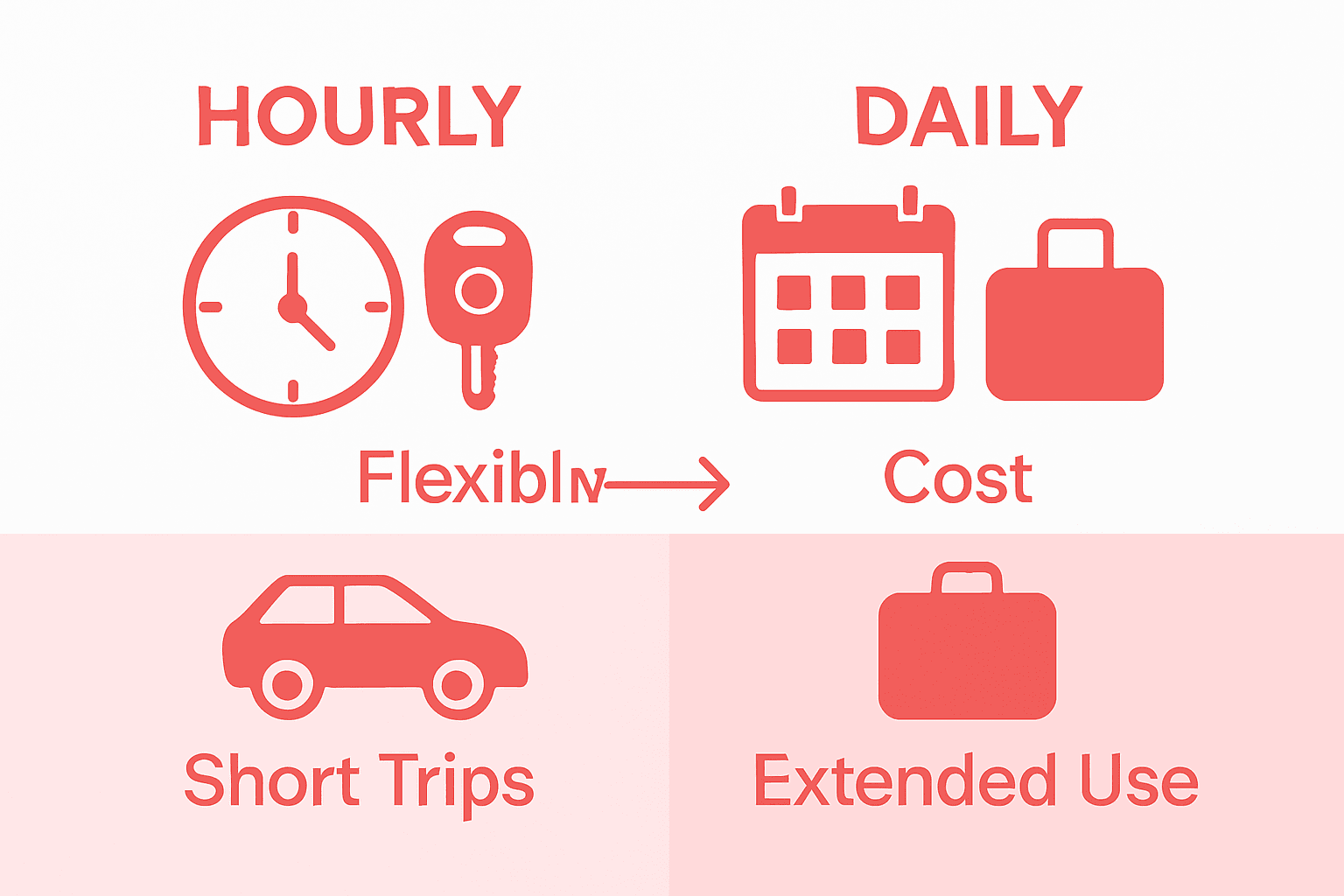
Here’s a quick comparison of hourly and daily rental durations to help determine which fits your travel plans best:
| Criteria | Hourly Rental | Daily Rental |
|---|---|---|
| Flexibility | High, for short trips | Better for full days |
| Typical Use Case | Quick errands or short tours | Extended travel or multi-day use |
| Cost Structure | Higher rate per hour | Lower average daily rate |
| Included Mileage | Often minimal, strict caps | Standard, e.g., 70 miles/day |
| Overage Charges | Frequent, for time or miles | Common for miles only |
| Booking Complexity | Often quick booking | May require more planning |
How Rental Periods Work in Practice
Rental periods are complex arrangements that define the legal and practical boundaries of temporary property use. A rental agreement serves as a critical contract between the owner and renter, establishing precise terms that govern the temporary possession and use of a vehicle, boat, or tour service.
In practical terms, rental periods can be structured in multiple ways. Fixed-term rentals specify an exact duration upfront, such as a week-long car rental or a three-day boat tour. Periodic rentals allow more flexibility, potentially enabling extensions or rolling agreements based on the renter’s changing needs. The rental contract will typically outline specific start and end dates, included services, potential penalties for early termination, and conditions for extending the rental period.
Pricing and additional charges are closely tied to rental period structures. Most rental services calculate costs based on the total duration, with rates potentially decreasing for longer rental windows. Some agreements include mileage restrictions, maintenance expectations, and specific usage guidelines that vary depending on the rental length. Renting involves a nuanced agreement where payment correlates directly with the temporary use of a good or service, making it crucial for renters to understand every detail of their specific rental period.
Pro Tip for Smart Renters: Always read the fine print and clarify exact rental period terms before signing, including potential prorated charges, extension options, and early termination penalties.
Understanding rental periods requires careful attention to detail. Short-term rental practices can vary significantly between different service providers, so comparing multiple options and understanding the specific terms of each rental agreement is essential for making an informed decision.
Rules, Restrictions, and Extensions Explained
Rental agreements are governed by complex rules that define the boundaries of usage, rights, and responsibilities. Rental duration clauses establish precise terms that outline the specific period during which an agreement remains valid, including critical details about start dates, end dates, and potential modification conditions.
Most rental services impose specific restrictions that protect both the renter and the property owner. These typically include mileage limitations, prohibited usage areas, maintenance requirements, and penalties for damages. Geographical restrictions might prevent cross-border travel with rental vehicles, while usage restrictions could limit the number of drivers or specify acceptable use conditions. Some agreements include additional requirements like mandatory insurance, age limitations, or specific driving record qualifications.
Rental periods are calculated on a calendar day basis, with precise start and end times critically important. Extension processes vary between services, but typically require advance authorization and may involve additional charges. Some rentals offer flexible extension options, allowing renters to prolong their agreement with minimal hassle, while others maintain strict termination policies that require new contract negotiations.
Pro Tip for Smart Renters: Always document the vehicle’s condition before and after rental, taking timestamped photographs that can protect you from unwarranted damage claims.
Understanding the nuanced essential travel rental best practices can help travelers navigate complex rental agreements more effectively, ensuring a smoother, more predictable rental experience.
Costs, Penalties, and Booking Tips
Understanding rental pricing structures requires careful analysis of multiple factors that influence total costs. Transportation services offer varied reservation types designed to accommodate different budget constraints and usage needs, with pricing models that can dramatically impact your overall expenses.
Base rates form the foundation of rental costs, but multiple additional charges can quickly escalate the total price. Common penalty areas include mileage overages, late returns, early termination, and damage fees. Some rentals include a standard mileage allowance – typically around 70 miles per day – with incremental charges applied for excess miles. Booking strategies can help mitigate these potential additional expenses, such as selecting rentals with more generous mileage packages or understanding precise usage limitations before signing the agreement.
Penalty structures vary significantly between rental services, making it crucial to read the fine print carefully. Some providers impose strict fees for minor infractions, while others offer more flexible terms. Late return penalties can range from hourly surcharges to full additional day rates, and damage assessments might involve complex evaluation processes that potentially impact your deposit or future rental eligibility.
The table below summarizes common penalties and extra charges to expect in rental agreements:
| Penalty Type | When Applied | Typical Impact |
|---|---|---|
| Mileage Overages | Exceeding mileage allowance | Per mile surcharge added |
| Late Return | Returning after agreed time | Hourly or daily penalty fee |
| Early Termination | Ending contract early | Could lose deposit or pay fee |
| Damage Fees | Vehicle not returned in same condition | Assessed repair or cleaning charges |
Pro Tip for Budget-Conscious Travelers: Compare total potential costs, not just base rates, by carefully reviewing mileage allowances, potential penalties, and additional fees before finalizing your rental reservation.
Navigating rental costs requires strategic planning. Essential travel rental best practices can provide additional insights into minimizing unexpected expenses and making informed booking decisions.
Master Your Rental Duration with Ease at Rentngo.biz
Navigating rental duration details like hourly versus daily rentals or understanding penalties for late returns can feel overwhelming. The article highlights common challenges such as tracking exact start and end times, mileage limits, and potential fees that impact your rental experience and budget. At Rentngo.biz, we specialize in simplifying these complexities for you. Our platform offers clear options for car rentals and boat tours with transparent pricing and straightforward rental terms so you can confidently plan your trip without surprises.

Take control of your rental period today by exploring our selection of flexible rental durations designed to fit your travel needs and avoid costly penalties. Discover how easy it is to book the right vehicle or boat tour with detailed pickup and return information right at your fingertips. Visit Rentngo.biz now and shop with confidence knowing you have clear rental duration guidelines supporting your journey.
Frequently Asked Questions
What is rental duration?
Rental duration refers to the specific timeframe during which a customer can use a rented item, such as a vehicle or equipment. It establishes the legal and financial boundaries of a rental agreement, setting clear parameters for usage and costs.
How does rental duration affect pricing?
Rental duration significantly impacts pricing structures. Rental services often calculate costs based on the total rental period, with longer rentals sometimes offering lower rates. Additional fees may apply for mileage, insurance, or extended usage.
What are the differences between hourly and daily rentals?
Hourly rentals provide flexibility for short-term needs, often at a premium rate, whereas daily rentals are more cost-effective for extended access, typically including a standard mileage allowance and lower average rates.
What should I check regarding rental duration in my agreement?
Always confirm the specific start and end times of your rental duration, including pickup and return locations. Review the terms for potential penalties for early returns, late check-ins, and any additional fees that may apply.
Recommended
- Role of Rental Agreements – Safeguarding Rentals Worldwide – Rent&Go Car Rental Vlore
- Why Rent a Car for Travel: Flexibility and Savings – Rent&Go Car Rental Vlore
- Complete Guide to Why Compare Rental Options – Rent&Go Car Rental Vlore
- The Essential Guide to Rentals in Travel – Rent&Go Car Rental Vlore
- Why Your California Rental Property Doesn’t Need an LLC – Law Office of Eric Ridley
Related Posts

7 Unforgettable Day Trip Ideas in Vlore for Travelers
Over one million American travelers choose undiscovered European destinations each…

How to Choose Rental Services for Leisure Adventures
Most American travelers spend nearly 40 percent more on leisure…

Why Rent a Car in Vlore: Complete Guide
Driving through Vlore opens a world of adventure that public…