
More than half of American travelers say flexibility is the top reason they rent a car for vacations. When every hour of your trip counts, relying solely on buses or taxis can limit where you go and what you experience. Renting a car puts you in the driver’s seat, letting you discover hidden attractions and travel on your own terms. This guide reveals how car rentals can unlock greater convenience, cost savings, and memorable adventures for your next journey.
Table of Contents
- What Renting a Car for Travel Means
- Types of Rental Cars and Key Features
- Benefits of Renting Vs. Other Options
- Understanding Rental Requirements and Policies
- Risks, Costs, and How to Avoid Pitfalls
Key Takeaways
| Point | Details |
|---|---|
| Flexibility in Travel | Renting a car offers travelers the freedom to create personalized routes and explore off-the-beaten-path destinations. |
| Diverse Vehicle Options | Various rental car categories cater to different travel needs, such as economy, SUVs, and luxury vehicles. |
| Avoiding Ownership Costs | Car rental eliminates long-term financial burdens associated with vehicle ownership, such as maintenance and insurance. |
| Understanding Rental Policies | Familiarizing yourself with rental agreements helps prevent unexpected fees and ensures a smooth experience. |
What Renting a Car for Travel Means
Renting a car for travel transforms your journey from a restrictive transportation experience into a flexible, personalized adventure. Unlike traditional travel modes, car rental offers travelers unprecedented freedom to explore destinations at their own pace and according to their unique preferences. Carsharing represents a modern mobility model where travelers can access vehicles for short periods, dramatically changing how we approach transportation during trips.
At its core, car rental means gaining complete control over your travel itinerary. Instead of depending on fixed public transportation schedules or expensive taxi services, you can create your own route, stop whenever you want, and access remote locations that might be challenging to reach through other means. This flexibility is particularly valuable for travelers wanting to discover off-the-beaten-path destinations or those needing to move between multiple locations quickly and efficiently.
Key Characteristics of Car Rental:
- Immediate vehicle access without long-term ownership commitments
- Ability to select specific vehicle types matching your travel needs
- Freedom to create personalized travel routes
- Cost-effective alternative to multiple transportation methods
- Opportunity to explore regions with limited public transit infrastructure
The modern car rental experience goes beyond simple transportation. Peer-to-peer carsharing demonstrates how travelers can engage with collaborative consumption models, where vehicle access becomes more dynamic and community-driven. This approach allows travelers to not just rent a car, but to potentially connect with local vehicle owners and gain unique insights into their destination.
Ultimately, renting a car for travel means transforming your trip from a structured, predetermined journey into a personalized exploration. It represents freedom, flexibility, and the ability to craft travel experiences that align perfectly with your individual preferences and spontaneous desires.
Types of Rental Cars and Key Features
Rental car options have evolved dramatically, offering travelers a diverse range of vehicles to match their specific travel needs and preferences. The ACRISS Car Classification System provides a standardized approach to categorizing rental vehicles, helping travelers understand the nuanced differences between car types and make informed selection decisions.
Primary Rental Car Categories:
- Economy Cars: Budget-friendly, fuel-efficient options for solo travelers or couples
- Compact Cars: Slightly larger than economy, offering more comfort and space
- Midsize Cars: Balanced option with enhanced comfort for longer trips
- Full-Size Cars: Spacious vehicles ideal for families or groups
- SUVs: Versatile vehicles for adventurers and travelers needing extra cargo space
- Luxury Cars: Premium vehicles with advanced features and superior comfort
- Passenger Vans: Large group transportation solutions
Each rental car category comes with distinct features and benefits tailored to different travel scenarios. Economy and compact cars typically provide excellent fuel efficiency and lower rental costs, making them perfect for urban exploration or budget-conscious travelers. Midsize and full-size cars offer more interior space, enhanced comfort, and increased luggage capacity, which can be crucial for longer journeys or family vacations.
Adventure seekers and travelers exploring diverse terrains will find SUVs particularly appealing. These vehicles offer higher ground clearance, more robust performance in challenging road conditions, and increased cargo flexibility. For travelers seeking a touch of elegance, luxury car rentals provide premium amenities, advanced technology features, and a more refined driving experience.

When selecting a rental car, consider factors beyond vehicle size. Examples of car rental services demonstrate the importance of matching vehicle characteristics with specific travel requirements. Important considerations include passenger count, luggage space, planned destinations, driving conditions, fuel efficiency, and personal comfort preferences. By carefully evaluating these factors, travelers can select a rental car that transforms their trip from a simple transportation experience into a comfortable, enjoyable journey.
Benefits of Renting vs. Other Options
Carsharing enables travelers to access vehicles without the financial burden of full ownership, presenting a compelling alternative to traditional transportation methods. Renting provides unprecedented flexibility that public transit, taxi services, and personal vehicle ownership simply cannot match. Travelers gain the ability to choose exactly the right vehicle for their specific journey, whether that means a compact car for city exploring or an SUV for mountain adventures.
Key Advantages of Car Rental:
- No long-term maintenance expenses
- Ability to switch vehicle types based on trip requirements
- Elimination of insurance, registration, and parking costs
- Immediate access to newer, well-maintained vehicles
- Simplified travel planning without vehicle ownership complexities
Peer-to-peer carsharing demonstrates how modern rental approaches can provide more economical transportation solutions, allowing travelers to access vehicles precisely when needed. Unlike owning a personal vehicle that depreciates constantly and incurs ongoing expenses, rental options provide a pay-as-you-go model that adapts to individual travel needs.
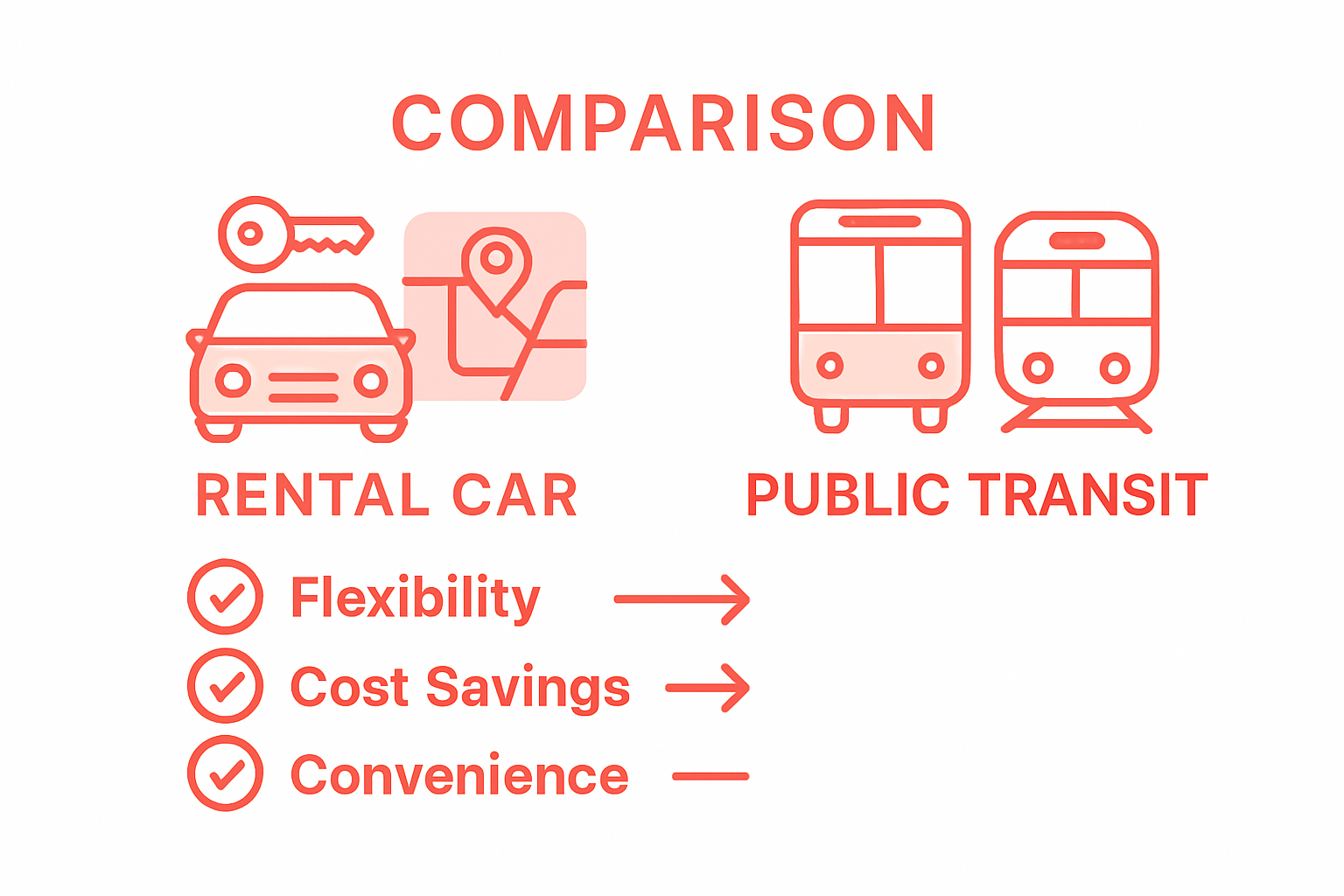
Comparing rental options against alternatives reveals significant financial and practical benefits. Public transportation restricts route flexibility, while taxi services become prohibitively expensive for extended trips. Personal vehicle ownership demands substantial upfront costs, continuous maintenance, insurance payments, and depreciation expenses. Rental cars eliminate these long-term financial commitments, allowing travelers to compare rental prices and select the most cost-effective option for their specific travel requirements.
Ultimately, car rental represents a smart, adaptable approach to travel transportation. By providing access to diverse vehicle types, eliminating ownership complexities, and offering unprecedented flexibility, rental services transform how travelers approach mobility. The ability to select the perfect vehicle for each unique journey, without the financial and logistical burdens of ownership, makes car rental an increasingly attractive option for modern travelers seeking convenience, affordability, and freedom.
Understanding Rental Requirements and Policies
Rental car agreements contain specific guidelines that travelers must carefully understand before embarking on their journey. These policies outline critical details about vehicle usage, insurance coverage, age restrictions, and potential financial responsibilities that can significantly impact the overall rental experience.
Key Rental Policy Components:
- Minimum and maximum age requirements
- Valid driver’s license documentation
- Credit card or payment method specifications
- Insurance coverage options
- Mileage limitations
- Vehicle return conditions
- Additional driver regulations
Damage waivers represent an important protection mechanism within rental agreements, allowing renters to minimize potential financial risks associated with vehicle damage or theft. These optional coverages provide travelers with peace of mind by limiting their personal liability in unexpected situations.
Rental requirements can vary significantly across different organizations and travel contexts, making it essential for travelers to carefully review specific terms before confirming their reservation. Typical requirements include presenting a valid driver’s license, having an acceptable credit card for security deposit, meeting minimum age restrictions, and demonstrating a clean driving record.
Understanding rental policies goes beyond mere legal compliance. The essential guide to rentals highlights the importance of comprehending all contractual details before signing any agreement. Travelers should pay special attention to potential additional fees, fuel policies, late return penalties, and specific restrictions that might impact their travel plans. Careful review of these policies can prevent unexpected charges and ensure a smooth, stress-free rental experience.
Risks, Costs, and How to Avoid Pitfalls
Damage waivers represent a critical mechanism for understanding financial risks in car rentals, providing travelers with essential protection against unexpected expenses. While rental agreements offer convenience, they also contain potential financial traps that can quickly escalate costs if not carefully navigated.
Common Rental Risks and Mitigation Strategies:
- Hidden fees and surcharges
- Unexpected insurance complications
- Potential vehicle damage charges
- Fuel policy misunderstandings
- Mileage restriction penalties
- Late return fees
- International rental complexities
State-contracted rental vendors often provide more comprehensive insurance coverage that can significantly reduce potential financial exposure. Travelers should carefully examine insurance options, understanding the specific terms of damage waivers and what exact scenarios are covered under different policy types.
Navigating rental agreements requires meticulous attention to detail. Potential pitfalls include undisclosed fees, complex insurance clauses, and strict return conditions that can transform an affordable rental into an expensive experience. Why compare rental prices becomes crucial in understanding the true cost of your rental beyond the initial quote. Smart travelers thoroughly read the fine print, ask clarifying questions about coverage limits, and document vehicle condition before and after the rental.
Risk management in car rentals goes beyond financial considerations. Travelers must also consider practical aspects like vehicle reliability, roadside assistance provisions, and potential geographic limitations. By approaching car rentals with a strategic mindset, understanding potential risks, and preparing comprehensive documentation, travelers can transform a potentially stressful experience into a smooth, predictable journey that offers maximum flexibility and minimal financial uncertainty.
Experience True Travel Freedom with Rentngo.biz
Traveling means choosing flexibility and saving money. The article highlights the value of renting a car to avoid the pitfalls of rigid public transport and costly taxi rides while gaining control over your itinerary. If you want to sidestep long-term vehicle ownership expenses and enjoy the freedom to explore your destinations on your own schedule, this is your solution. Renting the right vehicle tailored to your needs means more comfort and less hassle during your trip.

Explore a wide variety of vehicles at Rentngo.biz, where you can easily compare rental prices and select options designed to match your travel style. Whether you need an economy car for city touring or an SUV for off-road adventures, our platform puts all choices in one place. Don’t wait until you arrive to figure out transportation—secure your rental today and unlock your personalized travel experience now. Visit Rentngo.biz to browse vehicles, learn about rental policies, and book your perfect car before your next trip.
Frequently Asked Questions
What are the main benefits of renting a car for travel?
Renting a car provides unmatched flexibility, allowing you to explore at your own pace, access remote destinations, and create personalized travel routes without relying on public transportation or taxis.
How does renting a car compare to other transportation options?
Car rental offers advantages like no long-term maintenance costs, immediate access to well-maintained vehicles, and the ability to choose the right vehicle type for your trip, unlike public transport and taxi services, which can be restrictive and expensive for longer distances.
What should I consider when choosing a rental car?
When selecting a rental car, consider factors like passenger count, luggage space, driving conditions, fuel efficiency, and personal comfort preferences to ensure the vehicle meets your specific travel needs.
What rental policies should I be aware of before renting a car?
Key rental policies include age requirements, valid driver’s license and payment method specifications, insurance coverage options, mileage limitations, and vehicle return conditions. It’s important to thoroughly review these details to avoid unexpected fees or issues.
Recommended
- Role of Car Rental in Travel: Complete Guide – Rent&Go Car Rental Vlore
- Role of Car Rentals in Tourism – Key Impacts and Benefits – Rent&Go Car Rental Vlore
- The Essential Guide to Rentals in Travel – Rent&Go Car Rental Vlore
- 7 Practical Examples of Car Rental Services for Travelers – Rent&Go Car Rental Vlore
Related Posts

Best 6 Car vs Boat Rental Vlore – Expert Comparison 2025
Travel in Albania offers more than beautiful views. Whether you…

Why Choose Local Vehicle Rentals: Complete Guide
Across american cities, more than 40 percent of travelers choose…

What Is Rental Duration and Why It Matters
Most American travelers do not realize how much their trip…