
Over 13 million american households participate in boating activities each year, drawn by the ease and freedom that boat rental services offer. Whether you crave a day on the lake or a fresh coastal adventure, renting lets you experience the water without the heavy upkeep of ownership. With so many choices and key legal details to consider, understanding how boat rental works helps you enjoy safe, memorable trips on your own terms.
Table of Contents
- What Is Boat Rental? Definition And Purpose
- Types Of Boat Rentals And Tours Available
- How The Boat Rental Process Works
- Legal, Safety, And Insurance Requirements
- Costs, Risks, And Booking Tips
Key Takeaways
| Point | Details |
|---|---|
| Boat rentals provide flexible access to watercraft | They cater to various recreational needs without the long-term commitment of ownership. |
| Different types of rentals are available | Options range from sailboats and motorboats to kayaks and luxury yachts, accommodating various skill levels and interests. |
| Understanding rental procedures is essential | Familiarize yourself with identification requirements, safety orientations, and rental agreements to ensure a smooth experience. |
| Be aware of legal and insurance obligations | Adequate insurance coverage and compliance with safety regulations are crucial for a secure rental experience. |
What Is Boat Rental? Definition and Purpose
Boat rental is a recreational service that allows travelers to temporarily use watercraft without owning them. According to Wikipedia, a boat livery is a facility where boats are rented out for various recreational purposes, typically available on hourly, daily, or weekly rental periods. These rentals can include a wide range of vessels from powered boats to sailboats and human-powered watercraft like kayaks and paddleboards.
The core purpose of boat rental is to provide accessible water transportation and leisure experiences for individuals who might not want to invest in purchasing and maintaining their own boat. Bareboat charters, as defined by Wikipedia, represent a specific type of rental where the renter assumes full operational responsibility for the vessel, including maintenance and insurance. This arrangement offers maximum flexibility for experienced boaters who prefer independent maritime adventures.
Boat rentals serve multiple traveler needs and preferences:
- Casual weekend recreation
- Fishing expeditions
- Sightseeing and tourist activities
- Water sports and adventure experiences
- Exploring coastal or inland waterways
For travelers seeking unique experiences, rental options guide can help understand the diverse ways boat rentals can enhance travel adventures. Whether you’re a seasoned sailor or a first-time water explorer, boat rentals offer an exciting way to enjoy maritime experiences without long-term commitments.
Types of Boat Rentals and Tours Available
Boat rentals offer a diverse array of watercraft options to suit different traveler preferences and skill levels. According to Wikipedia, bareboat charters represent one of the most popular rental types, where individuals can rent a vessel without crew, taking full responsibility for its operation. These rentals range from small personal watercraft to larger sailing and motorized boats.
Specialized boat rental options cater to various recreational interests. Wikipedia highlights canoe liveries as a specific type of rental service focused on providing human-powered watercraft like canoes and kayaks, typically located near rivers, lakes, and streams. These specialized rentals offer unique experiences for adventure seekers and nature enthusiasts.
Different types of boat rentals include:
- Sailboats
- Motorboats
- Fishing boats
- Kayaks and canoes
- Pontoon boats
- Luxury yachts
- Jet skis
- Paddleboards
Travelers can explore multiple rental experiences, and our guide to adventure rentals provides additional insights into selecting the perfect watercraft for your journey. Whether you’re planning a calm lake cruise or an exciting coastal expedition, boat rentals offer flexible options to match every traveler’s maritime dreams.

How the Boat Rental Process Works
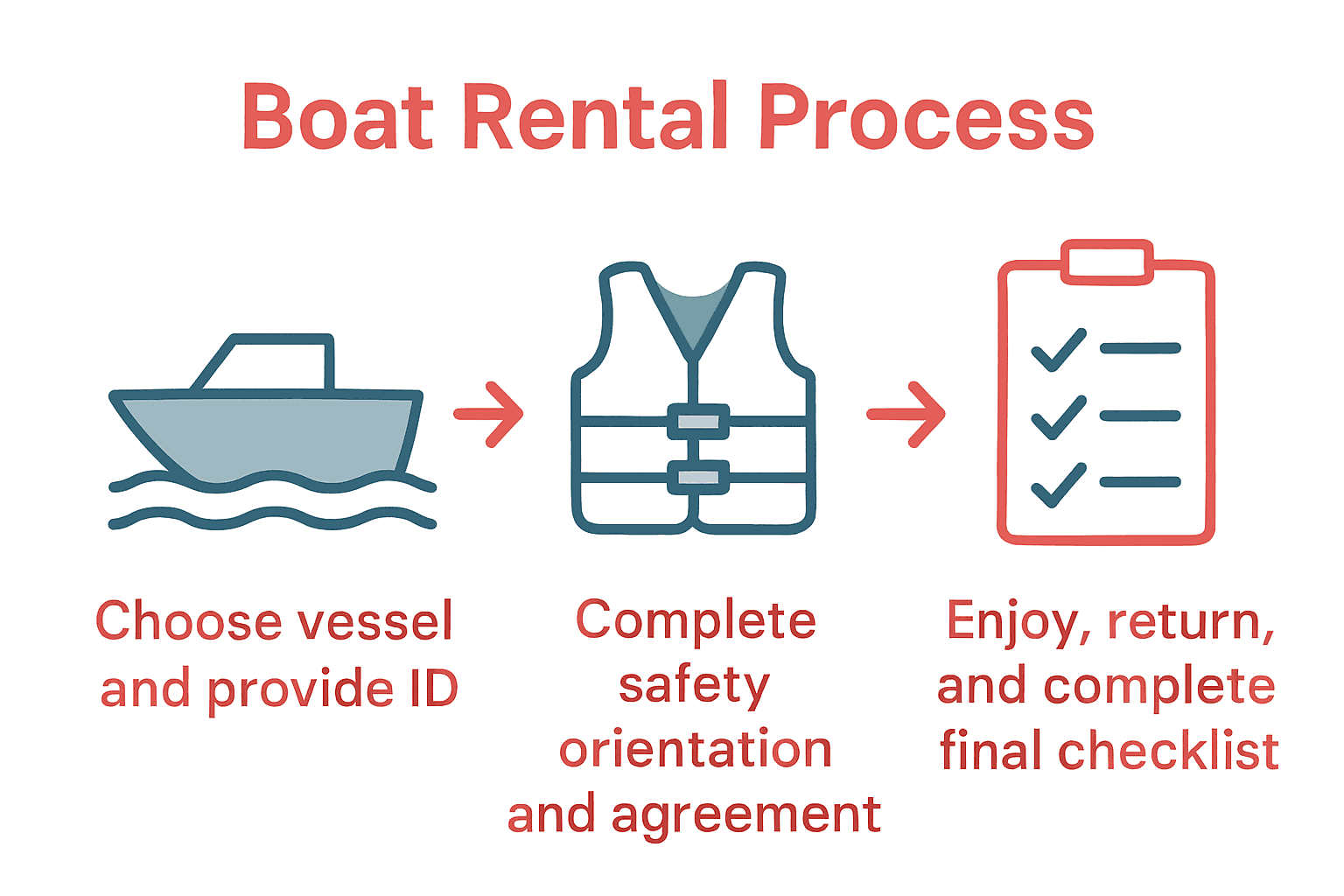
Boat rental involves a straightforward process designed to help travelers quickly access watercraft for their adventures. According to the National Park Service, rental facilities must adhere to specific standards that ensure a safe and consistent experience for customers. The typical rental process begins with selecting an appropriate vessel that matches your skill level, intended use, and comfort requirements.
The standard boat rental procedure typically includes several key steps. First, renters must provide valid identification and typically a credit card for potential damages. Most rental services require a brief safety orientation or proof of boating experience, especially for more complex watercraft. Rental agreements outline the terms of use, including responsibilities for equipment maintenance, fuel costs, and potential additional fees for late returns or damages.
Critical steps in the boat rental process include:
- Selecting your preferred watercraft
- Providing necessary identification
- Completing a rental agreement
- Participating in safety orientation
- Inspecting the boat before departure
- Understanding return procedures and fuel requirements
- Checking insurance and liability coverage
Travelers looking to streamline their rental experience can refer to our guide to adventure rentals for additional insights. Each rental facility may have slight variations in their process, but the fundamental goal remains the same: providing a safe, enjoyable, and hassle-free maritime experience for every customer.
Legal, Safety, and Insurance Requirements
Boat rentals involve complex legal and safety considerations that protect both the rental operator and the customer. According to the Association of Inland Navigation Authorities, hire boat standards are designed to ensure comprehensive safety protocols and operational guidelines for watercraft rentals. These regulations typically cover vessel condition, equipment requirements, and operational limitations to minimize potential risks.
Insurance requirements form a critical component of boat rentals. Most rental services mandate specific insurance coverage that protects against potential damages, liability, and personal injury. The Seychelles Boat Charter Policy highlights the importance of comprehensive insurance that covers environmental risks, passenger safety, and potential maritime incidents.
Key legal and safety considerations include:
- Minimum age requirements for renters
- Valid boating licenses or certifications
- Mandatory safety equipment
- Proof of maritime experience
- Comprehensive liability insurance
- Environmental protection regulations
- Personal safety equipment requirements
- Emergency communication protocols
For travelers seeking additional guidance on navigating rental requirements, our guide to adventure rentals provides valuable insights. Understanding these legal and safety frameworks ensures a secure and responsible boating experience for all participants.
Costs, Risks, and Booking Tips
Boat rental represents a strategic approach to accessing watercraft without substantial financial investment. According to Wikipedia, renting helps travelers reduce fixed costs and minimize financial risks associated with ownership. Instead of purchasing and maintaining a boat, renters pay only for their actual usage, avoiding expensive long-term expenses like storage, maintenance, and depreciation.
Understanding potential risks is crucial for a safe rental experience. The National Park Service provides comprehensive guidelines on operational procedures and safety measures that help renters navigate potential challenges. Risk management involves carefully reviewing rental agreements, understanding insurance coverage, and assessing personal maritime skills before embarking on a watercraft adventure.
Key booking and cost considerations include:
- Comparing hourly versus daily rental rates
- Checking seasonal pricing variations
- Understanding deposit and insurance requirements
- Evaluating additional equipment rental costs
- Reviewing cancellation and refund policies
- Assessing fuel consumption expenses
- Checking for potential damage penalties
- Verifying required certifications or experience levels
Travelers looking to maximize their rental value can explore our budget travel rental tips for additional strategies. Careful planning and thorough research can transform a potentially stressful rental experience into an exciting and budget-friendly maritime adventure.
Discover the Freedom of Boat Rentals with Rentngo.biz
Navigating the world of boat rentals can be overwhelming with all the safety requirements, insurance concerns, and rental options to consider. Whether you want to try a bareboat charter, explore with a kayak, or enjoy a luxury yacht experience, you need a rental service that makes this process simple and secure. Many travelers struggle to find reliable platforms that offer clear pricing, easy booking, and flexible choices that match their skill level and adventure style.
Experience hassle-free boat rentals on Rentngo.biz where you can quickly browse a wide variety of watercraft to fit your travel goals. Our site helps you avoid the stress of unclear rental policies by providing transparent terms and streamlined booking all in one place.

Take control of your next water adventure today. Visit Rentngo.biz now to select the perfect boat rental for your trip. Don’t wait risk missing out on prime dates or deals. Unlock your maritime journey with confidence and ease by exploring all boat rental options on our platform. Start your reservation now and make unforgettable memories on the water.
Frequently Asked Questions
What is boat rental?
Boat rental is a recreational service that allows individuals to temporarily use watercraft without owning them, providing access to various vessels for leisure and transport purposes.
What types of boats can I rent?
You can rent a wide range of boats, including sailboats, motorboats, fishing boats, kayaks, canoes, pontoon boats, luxury yachts, jet skis, and paddleboards, catering to different recreational needs.
What are the typical steps in the boat rental process?
The typical boat rental process includes selecting a vessel, providing identification, completing a rental agreement, participating in a safety orientation, inspecting the boat, and understanding return procedures.
What legal and safety requirements should I be aware of when renting a boat?
Key legal and safety requirements include valid boating licenses, minimum age for renters, mandatory safety equipment, proof of maritime experience, liability insurance, and compliance with environmental protection regulations.
Recommended
- Role of Car Rental in Travel: Complete Guide – Rent&Go Car Rental Vlore
- The Essential Guide to Rentals in Travel – Rent&Go Car Rental Vlore
- 7 Types of Travel Rentals Every Adventurer Should Know – Rent&Go Car Rental Vlore
- Complete Guide to Why Compare Rental Options – Rent&Go Car Rental Vlore
Related Posts
Top Vehicle Rental Sites for 2026: Expert Comparison
Travelers are always looking for new ways to make their…
Why Rent a Boat on Vacation: Adventure and Freedom
Nearly half of American leisure travelers now choose boat rentals…

Role of Car Rentals in Tourism – Key Impacts and Benefits
Most American tourists choose car rentals as their top travel…